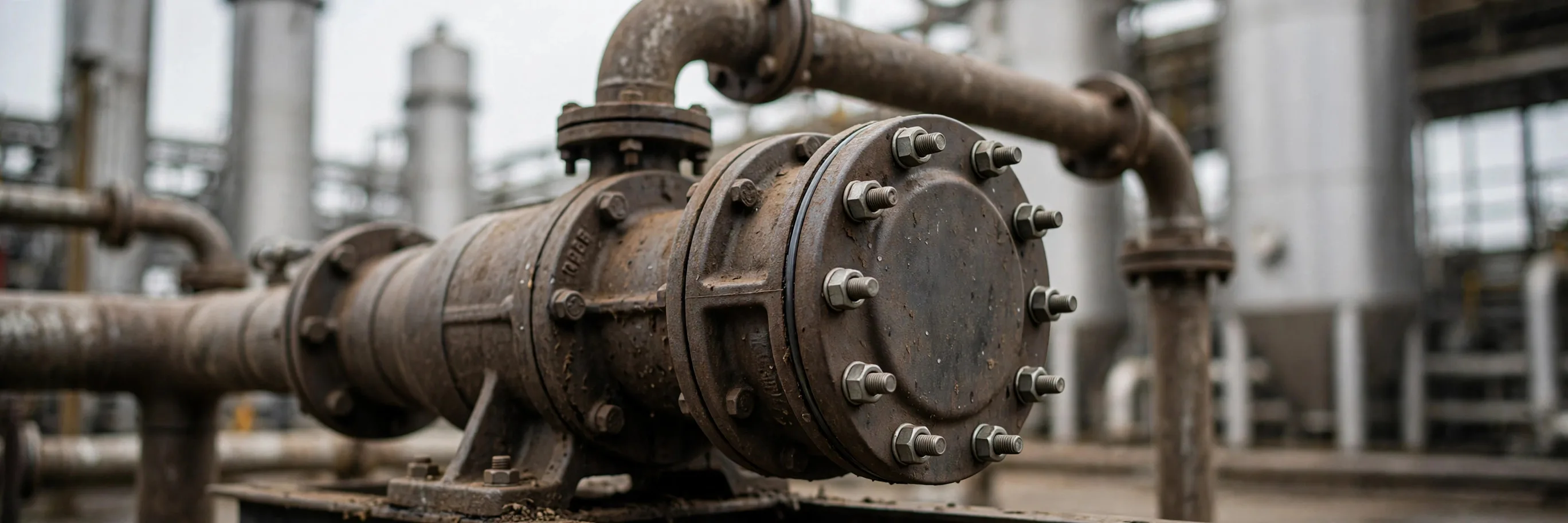
A single bolting list for the whole evaporator plant hides the difference between the stages: a stud that lasts at the weak end may crack at the strong end.
How the liquor changes through the train
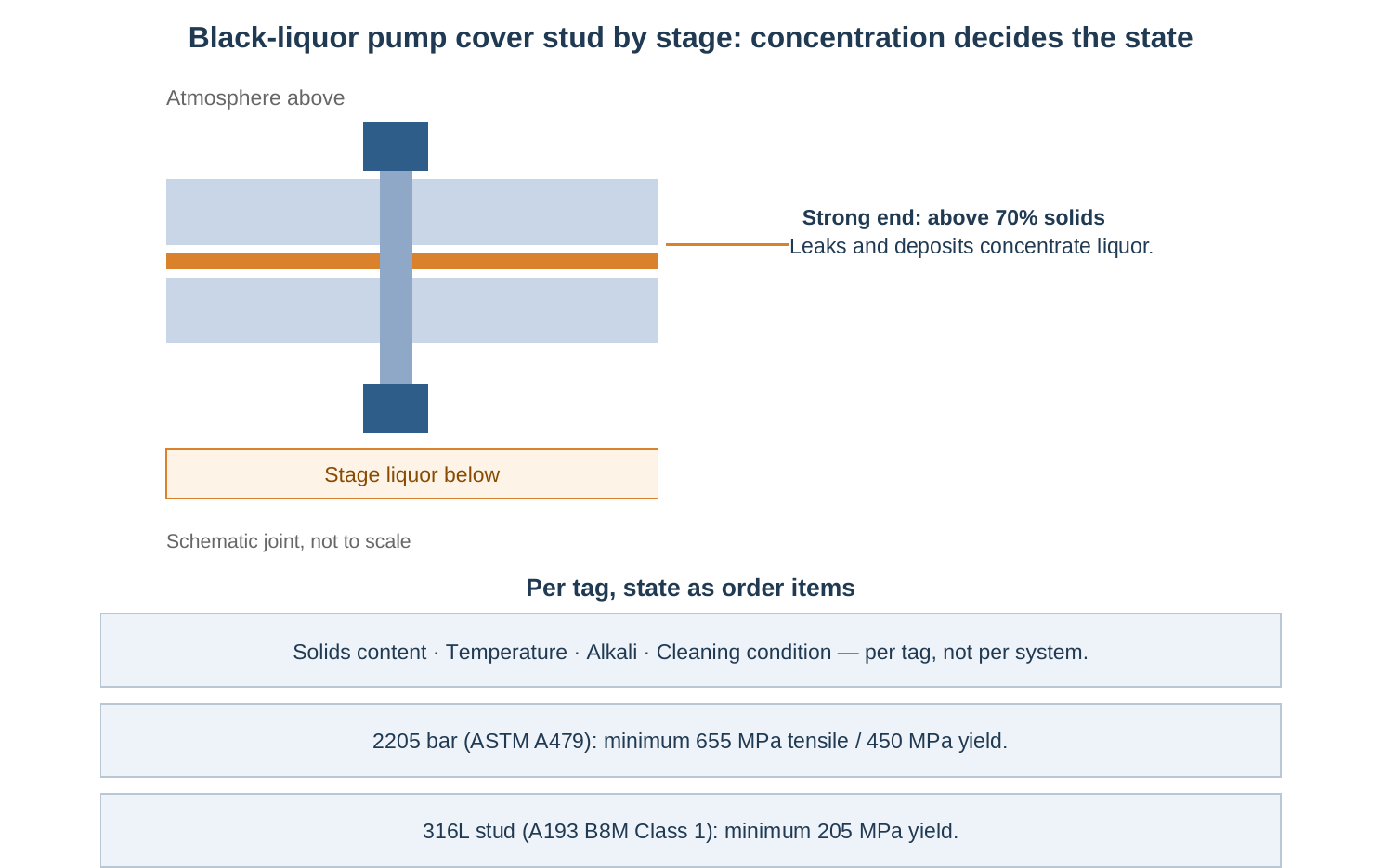
Kraft evaporators concentrate black liquor from about 15% dry solids at the weak end to 70–85% at the strong end, according to Valmet's summary of evaporator issues, which lists scaling and corrosion among the main operating problems. As the water is removed, alkali and dissolved salts concentrate, and the liquor has to run hotter to stay pumpable.
A TAPPI Journal study of high-solids concentrators reports that concentrators at about 80% solids often suffer aggressive corrosion, and monitored 304L and the duplex grades 2205 and SAF 2906 in that service. Many of the attacks traced back to process conditions. Once the stainless surface had been activated, it did not readily repassivate.
Take the dry solids, temperature and alkali for each tag from the liquor analysis at that position, not from the plant average.
The strong end, leaks and washing
The studs on a heavy liquor pump or concentrator cover are not normally wetted. The damage starts where liquor gets out: a weeping gasket, a seal leak, or splash at a liquid level. There the liquor dries and concentrates further on hot metal. A mill case study of a 304L heavy black liquor tank found high chloride at the crack tips even though the bulk liquor chloride was low, and traced the cracking to that concentration effect at the liquid line. A stud under a crusted nut sits in the same kind of concentrated residue.
Vapour and condensate are a separate duty. Evaporator condensates carry little alkali but can contain sulfur compounds and methanol, so studs in a vapour space should be listed as such.
Washing is a third duty. Evaporators are washed to remove scale, with hot condensate, weak liquor or, in some mills, acid. State the washing method, chemical, temperature and frequency for each tag, so the stud grade is checked against all of them.
Choosing the grade by stage
| Candidate | UNS and form | Where it fits | Limit to check |
|---|---|---|---|
| 316L | S31600/S31603, ASTM A193 B8M Class 1 (316/316L dual-certified) | Weak and intermediate effects with dry studs | 205 MPa minimum yield; cracking where strong liquor concentrates |
| Duplex 2205 | S32205, bar to ASTM A479 | Heavy liquor pumps, concentrator covers, strong-end storage | Repeated leaks or deposits on hot studs; washing chemicals |
| Super duplex 2507 | S32750, bar to ASTM A479 | Candidate where 2205 has shown attack; evaluate against liquor data | Prolonged exposure above about 250°C |
| Inconel 625 | N06625, bar to ASTM B446 | Rarely needed; specific acid-wash or local problems | Cost; not a default for alkaline liquor |
Duplex stainless steels have been used in kraft mills for decades because they combine strength with resistance to alkaline liquors and to chloride stress corrosion cracking. Duplex 2205 in ASTM A479 bar has a minimum of 655 MPa tensile and 450 MPa yield. 2205 is not immune at the strong end, though. Duplex grades were among the materials monitored in the TAPPI study precisely because high-solids concentrators can attack them too. Where 2205 has been attacked, 2507 is a candidate worth evaluating, but whether it performs better there should be judged from the liquor composition, temperature, cleaning practice and the corrosion record at that position, and the process conditions that triggered the attack deserve as much attention as the grade. Whichever grade is chosen for a pressure cover, confirm that its specification and condition are accepted as bolting under the vessel's design code (for ASME equipment, the Section II-D bolting tables), not only as bar.
Super duplex 2507 has a PRE of at least 41 and a minimum 0.2% proof strength of 550 MPa in Alleima's SAF 2507 bar datasheet. Concentrator temperatures are well below the 250°C above which the datasheet warns of embrittlement with long exposure.
Duplex performance depends on correct solution annealing. Ask for the heat-treatment record and a ferrite check on the certificate; see our guide to duplex heat treatment and inspection.
Nuts, mixed metals and outage records
Pair duplex studs with nuts of the same grade, such as 2205 heavy hex nuts, and use an anti-seize rated for alkaline service at the operating temperature. Include the casing or flange material in the order, so the nut and washer choice suits the parts they bear on.
At each outage, record by tag:
- which studs were crusted with liquor and where the leak came from
- cracking or pitting at the first engaged thread
- which nuts seized, and how they were removed
If the failures sit only on covers that leak, the gasket deserves as much attention as the stud grade.
Requesting a quote
List the bolting by tag, for example: "M24 2205 stud and nut sets for the heavy liquor pump covers at the concentrator outlet, tags 32-P-210 and 32-P-211; about 75% dry solids, 130°C; studs crusted at the last outage; condensate wash weekly."
Tag by tag, we confirm the grade and inspection plan and price 2205 stud bolts or 2507 stud bolts with matching nuts. For other parts of the mill, see our guides to digester and bleach plant bolting, or the pulp and paper page.