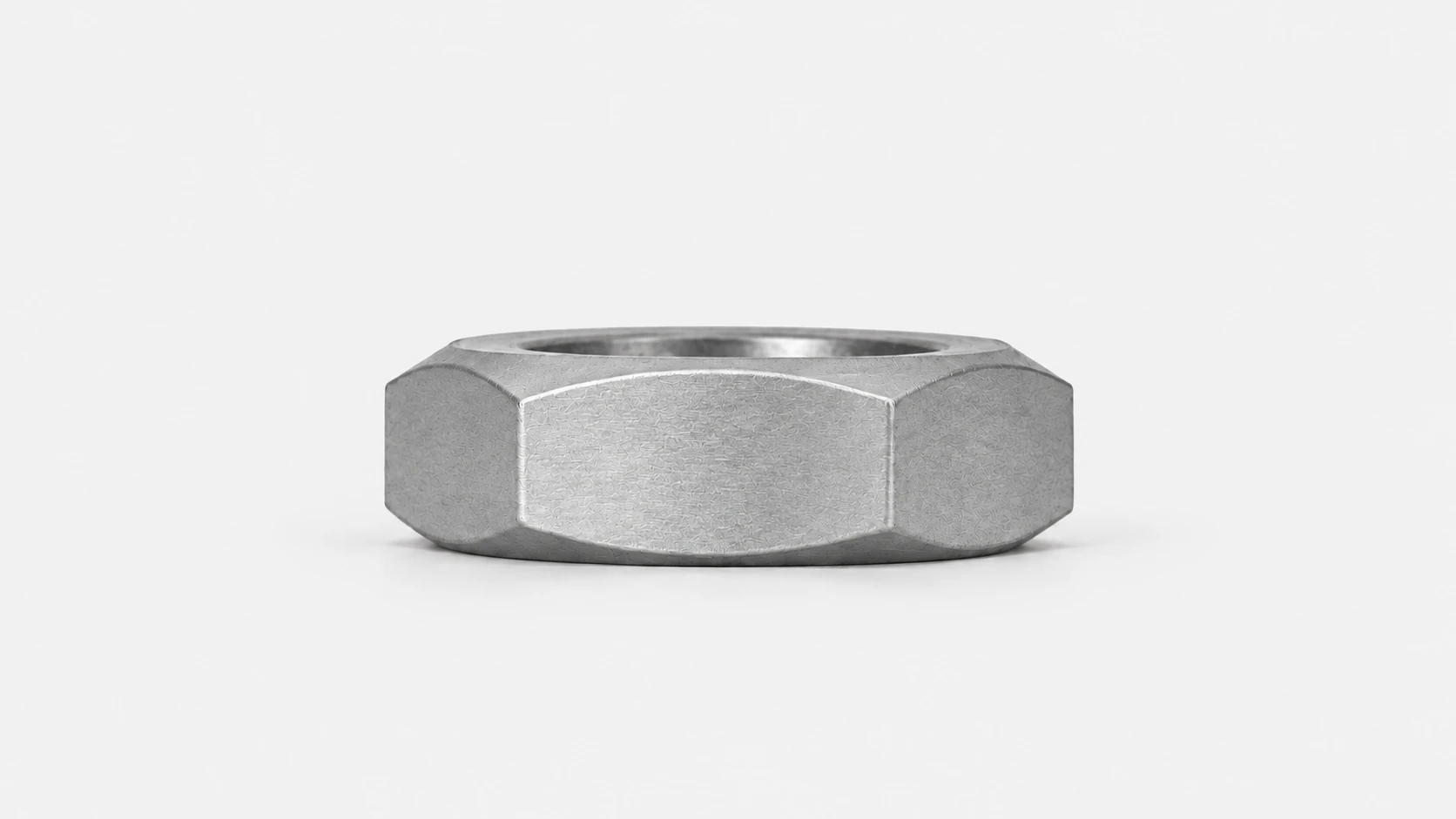
Special alloy thin hex nuts
Tight axial spaces and paired jam-nut arrangements call for a reduced-height nut. The shorter engagement changes the load-carrying capability, so nut height, material strength and the intended locking arrangement belong in the assembly specification.
- Pattern
- Thin hex · Jam nut
- Key dimensions
- Thread · Across flats · Height
- Threads
- Metric · UNC · UNF
- Assembly
- Adjusters · Paired nuts
- Materials
- Nickel alloys · Duplex steels · Titanium
EN 10204 3.1 MTC · Heat traceability
Thin hex nuts material selection
Show fewer materials
Equipment & applications
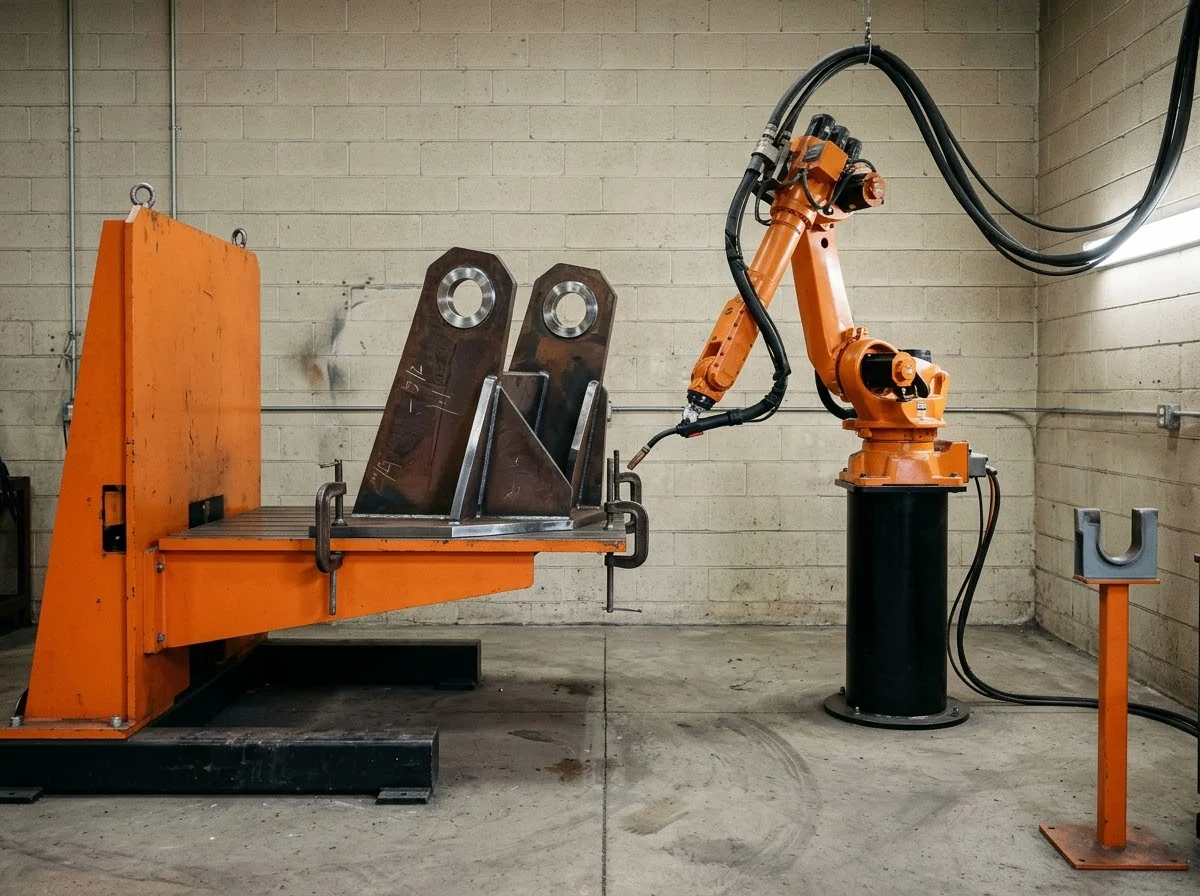
Positioning & locating
Lock an adjustment screw or threaded stop where axial space is limited. A paired jam-nut arrangement secures the setting without a full-height second nut.
Actuator mountings
Retain threaded actuator stops and linkage adjustments. The reduced nut height fits between the adjustment shoulder and nearby bracket.
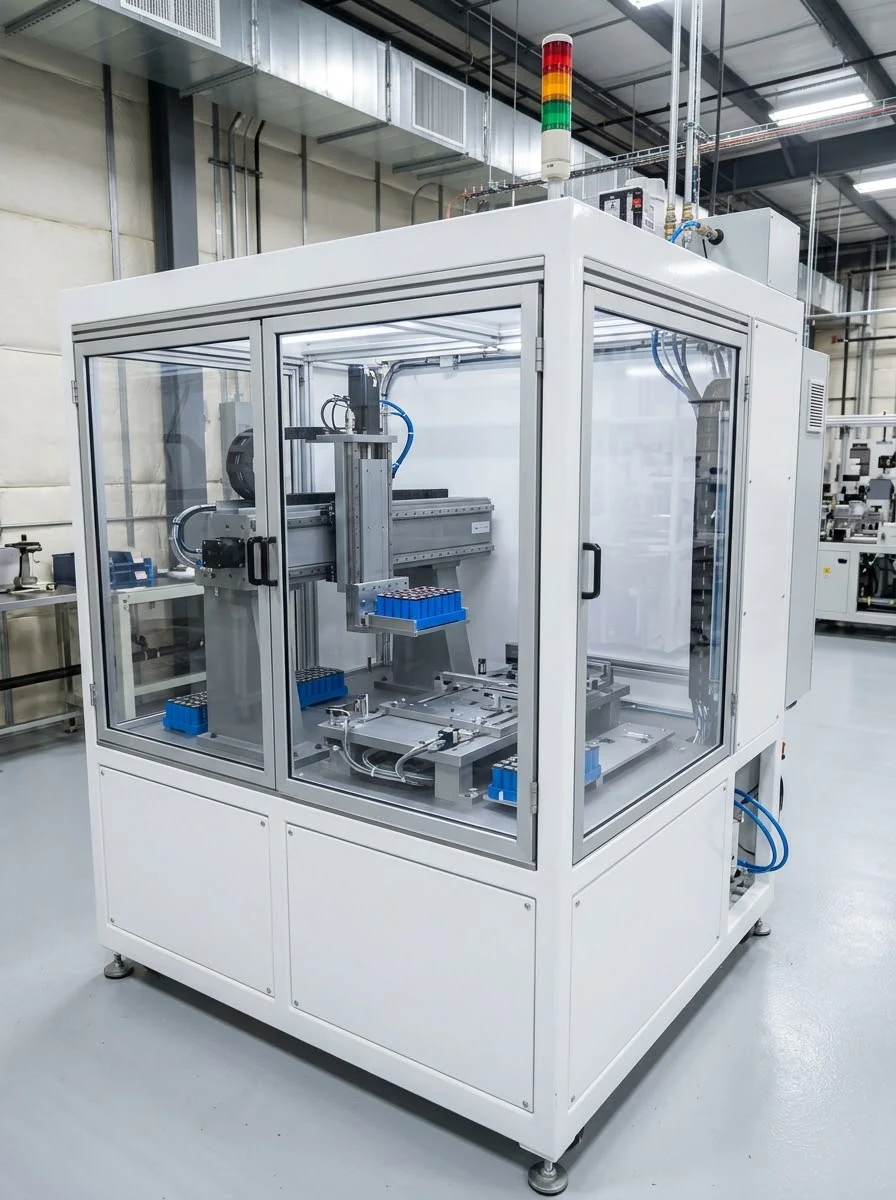
Assembly tooling
Secure fine-positioning screws on assembly jigs. A thin nut leaves more adjustment travel in a short threaded section while locking against the fixture face.
Thin hex nuts configurations & dimensions

Reduced-height body
Use in compact adjustment mechanisms and panel assemblies where axial clearance rules out a full-height nut. Check the required proof load against the reduced engagement rather than selecting on clearance alone.

Jam-nut arrangement
Use with a second nut to lock an adjustment on a threaded shaft or linkage. The specified nut order and tightening sequence are part of the locking arrangement, not simply two nuts tightened independently.
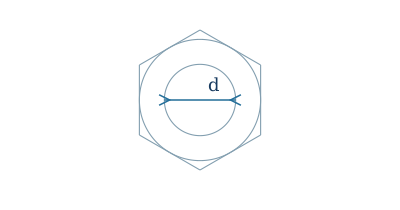
Dimension guide
Loading 3D model…
Drag to rotate · Scroll to zoom
Product and thread standards
Raw Material Specifications
Other Materials & Specifications
Threads · Metric
Threads · Inch
Dimension Reference
Production & heat treatment
CNC · Low-Profile Bodies
Bar machining controls the reduced body height for short runs. Chamfers are kept small enough to preserve useful internal-thread engagement within the thin section.
Tapping & Flatness
Tapping and gauging verify the short engagement length. Both faces are checked for flat seating, particularly when the nut is used against a second nut in an adjustment assembly.
Cold Forming / Hot Forging
Small thin nuts in long runs favour cold forming of ductile stock with little waste. Large diameters or high-resistance alloys favour hot-forged blanks, then facing and tapping to keep the thin body parallel.
Heat Treatment & Proof Load
Inconel 718 ageing develops strength after solution treatment; C-276 solution annealing restores the corrosion-resistant condition after heavy forming. Finished-nut hardness and proof-load requirements are checked for the thin pattern rather than assumed from a full-height nut.
Testing, MTC 3.1 & material traceability
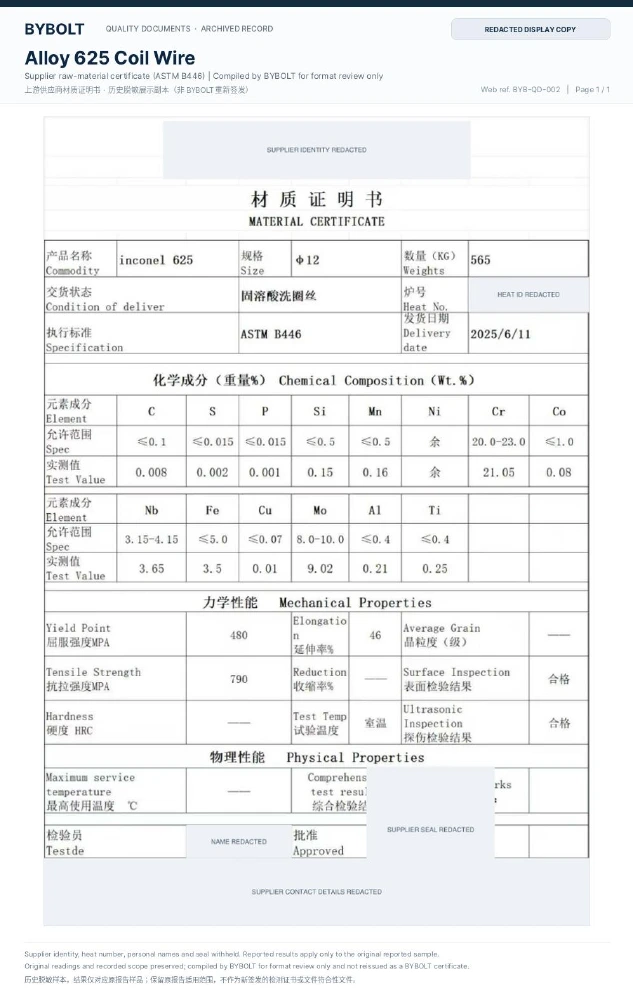
Material certificate
Inconel 625 · historical coil-wire sample

Laboratory report
Inconel 718 · chemistry, tensile & hardness
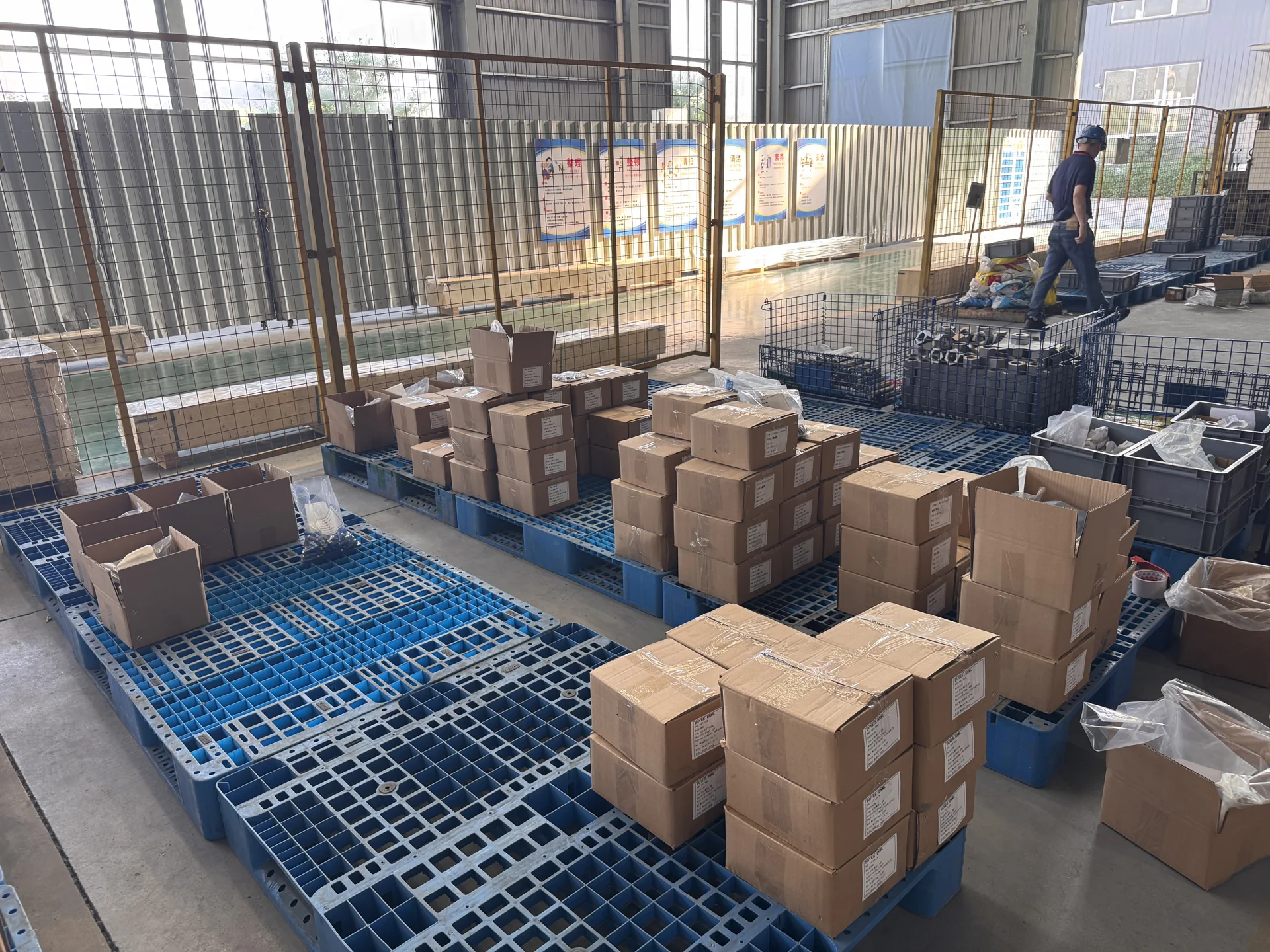
Identified packing
Heat and batch records linked to the shipment
Additional inspection requirements +
PMI, third-party inspection and witness testing are available by order. Project inspection plans can include UT/PT and heat-treatment records.
Matching products for thin hex nuts
Prepare your enquiry
- Material
- Grade / UNS · Condition
- Size
- Diameter · Length / height
- Thread
- Pitch / TPI · Form & class
- Quantity
- Pieces per size