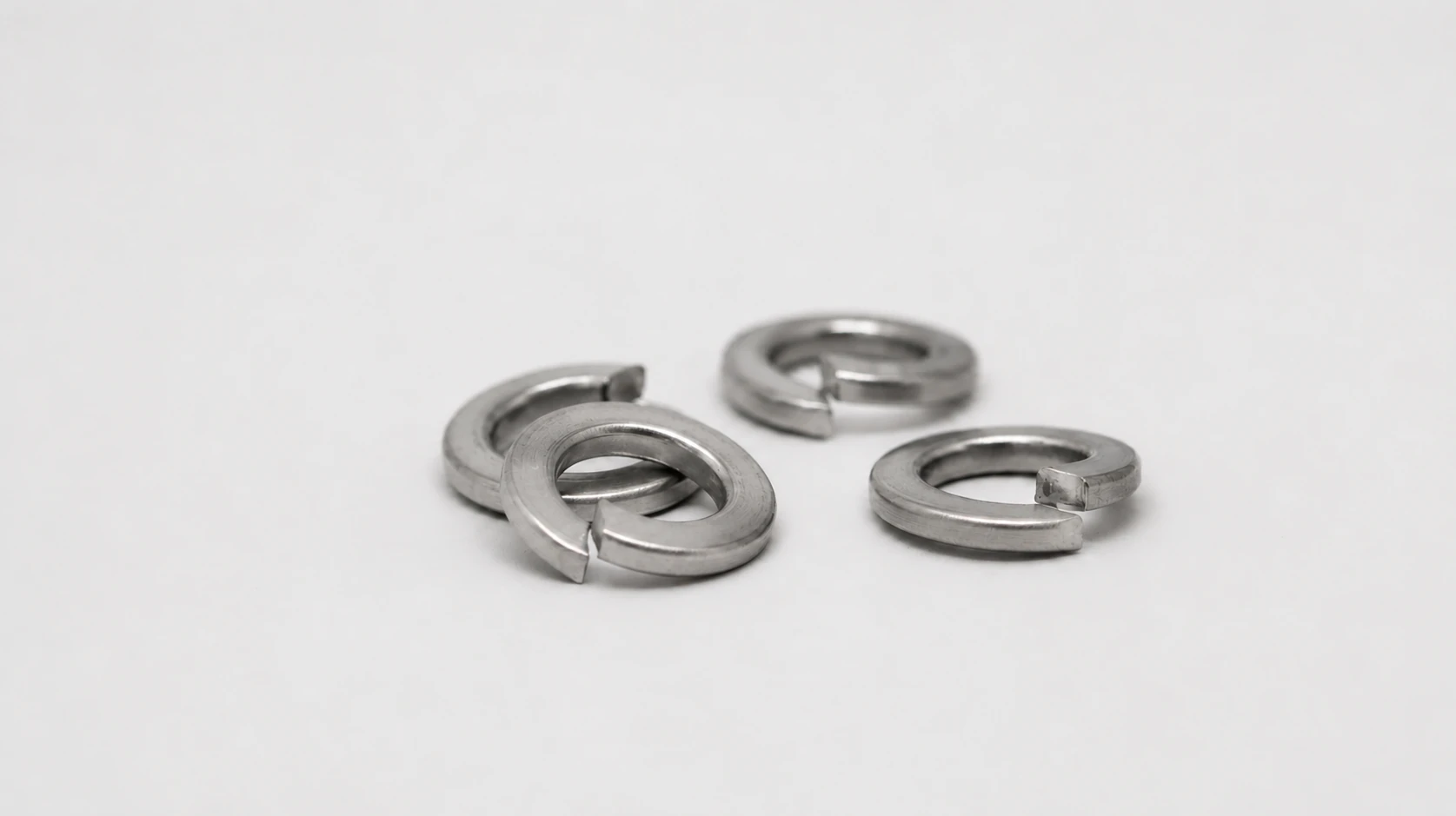
Special alloy split lock washers
For replacement assemblies that specify split lock washers, match the washer section, free height and alloy to the original joint stack. Vibration-critical joints need a locking method selected for that duty; a split washer alone is not a substitute.
- Form
- Split helical ring
- Key dimensions
- Bore · Section · Free height
- Assembly
- Under nut or bolt head
- Sizing
- Metric · Inch
- Materials
- Nickel alloys · Stainless steels
EN 10204 3.1 MTC · Heat traceability
Split lock washers material selection
Equipment & applications
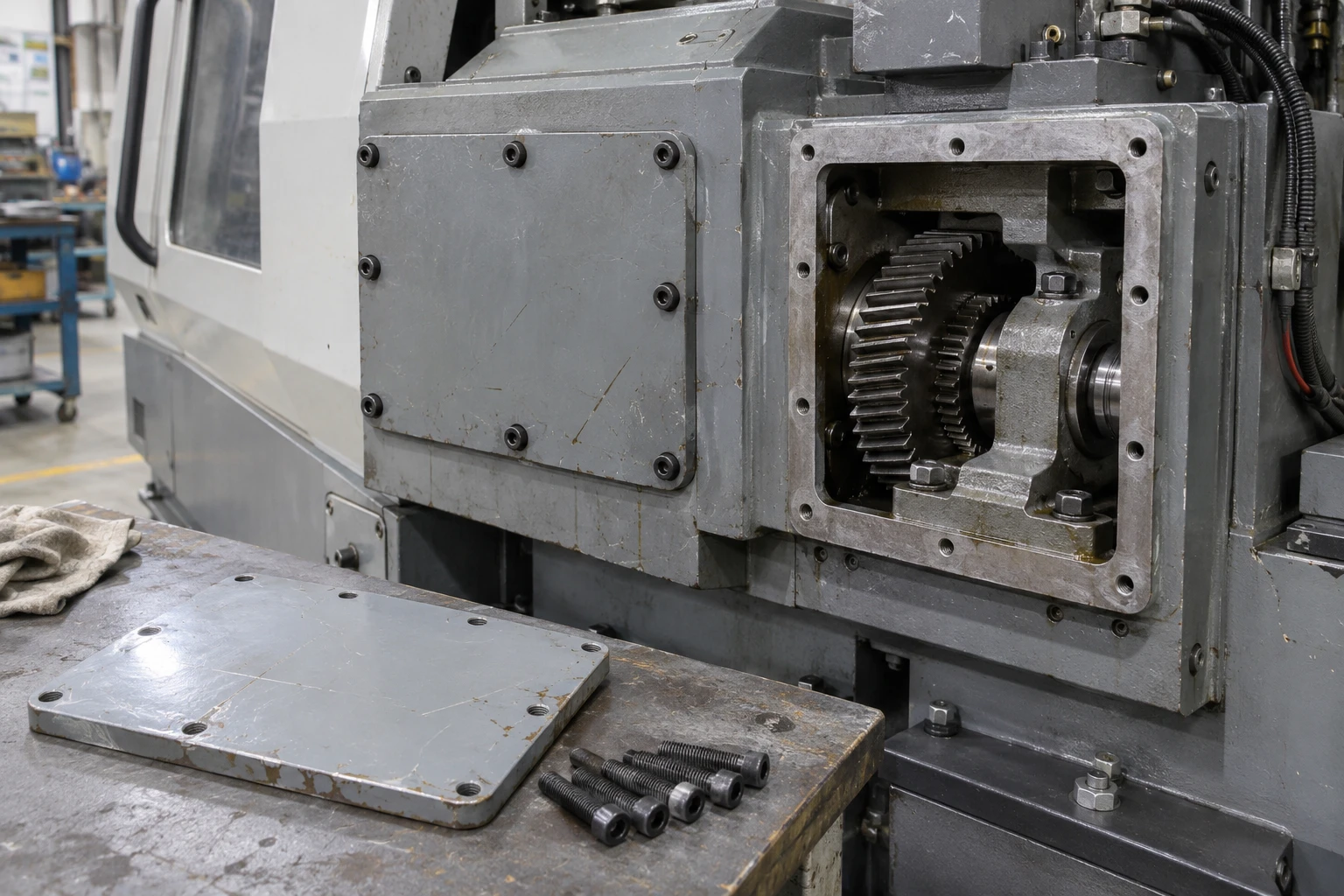
Machine covers
Replace split washers in machine-cover assemblies that retain this washer pattern. Bore and section size must fit beneath the original bolt head without fouling the cover recess.
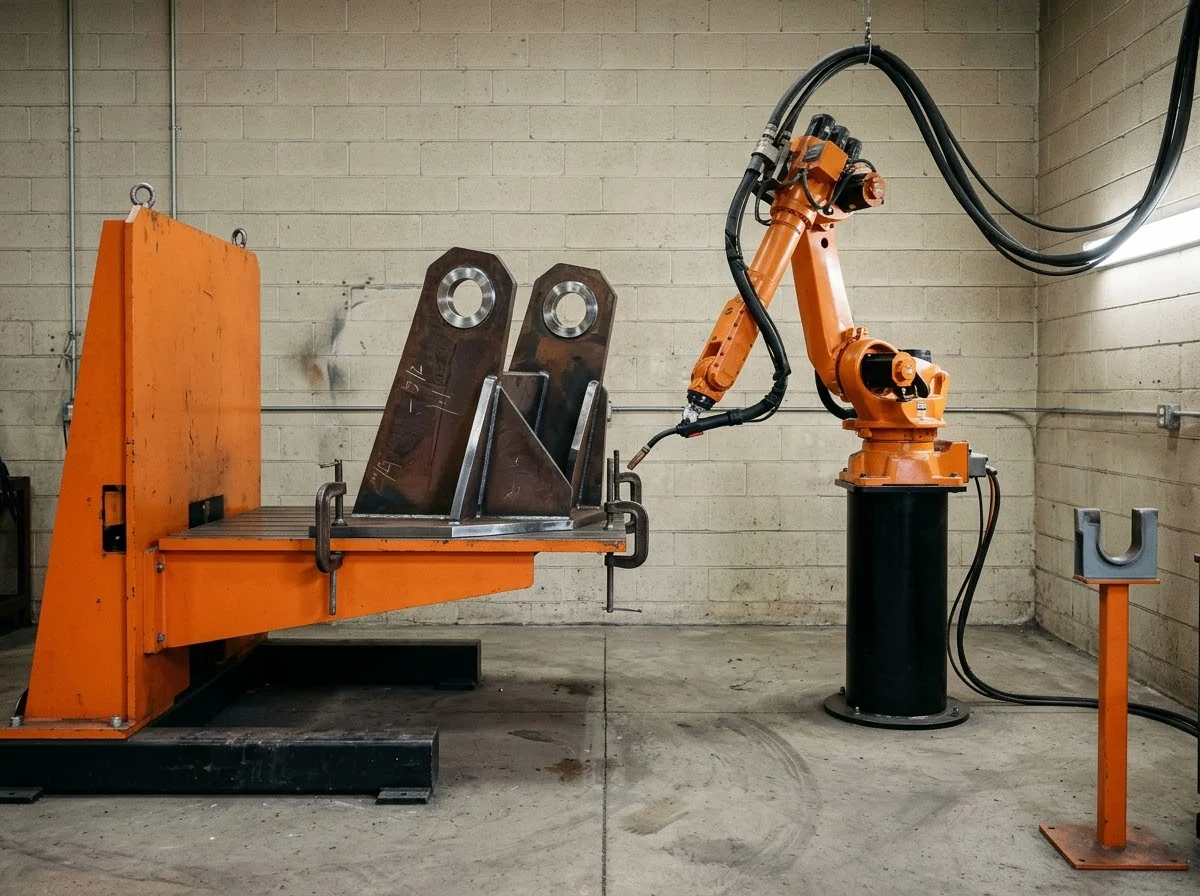
Actuator mountings
Complete actuator mounting hardware where the equipment parts list includes split washers. The compressed thickness contributes to bolt grip and available thread engagement.
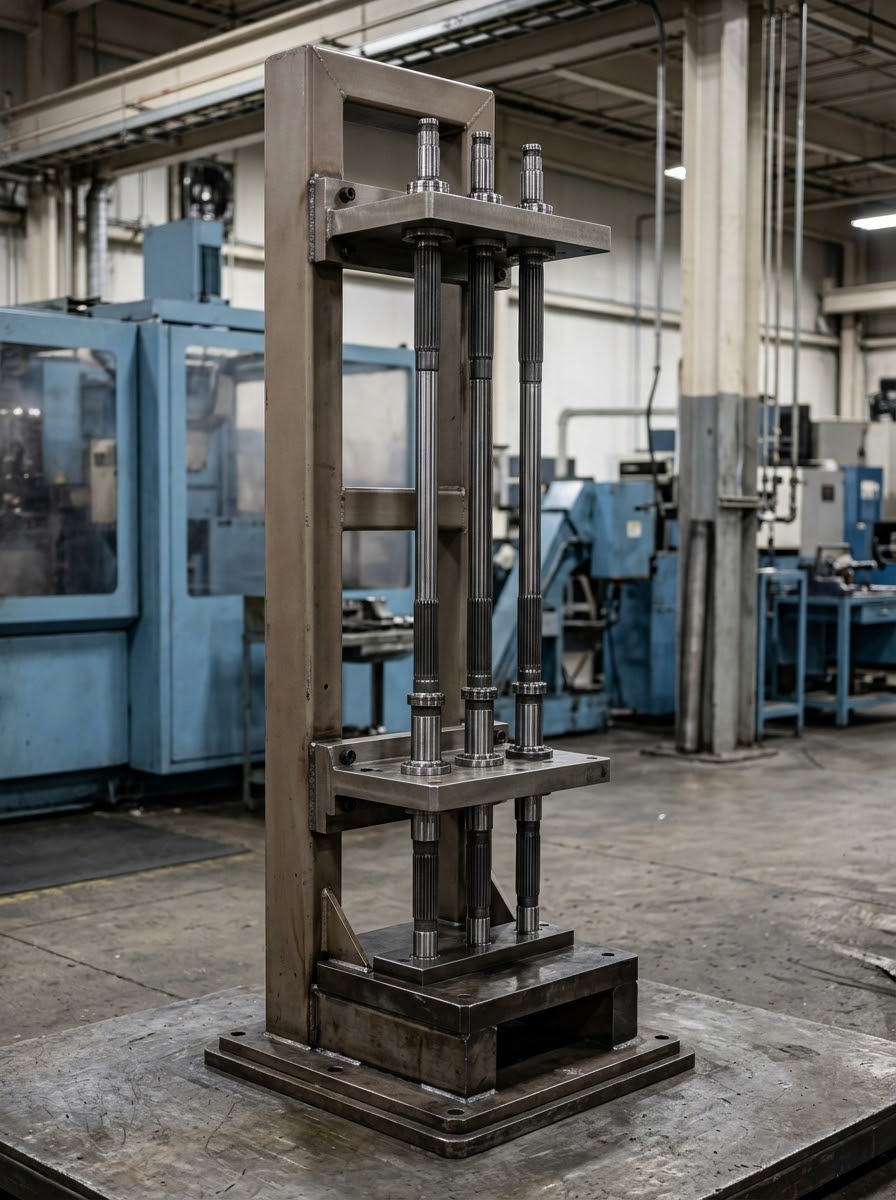
Maintenance fixtures
Supply matched replacement washer sizes for service fixtures. Keeping the original bore, section and free height avoids changing the seating stack when bolts are renewed.
Split lock washers configurations & dimensions
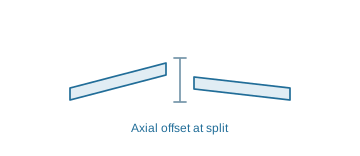
Free state
The open helical shape supplies initial spring travel as a screw or nut is tightened. Free height and section size determine how much travel is available before the washer becomes flat.

Clamped state
Once flattened, little spring travel remains to compensate for settling. For an assembly needing controlled preload travel, compare a disc spring; for a vibration-critical joint, select a locking method validated for that joint.
Dimension guide
Loading 3D model…
Drag to rotate · Scroll to zoom

Product standards & dimensional specifications
Raw Material Specifications
Other Materials & Specifications
Dimension Reference
Production & heat treatment
Section Preparation
Wire or strip is prepared to the washer section before coiling. Section width and thickness determine the bearing footprint and the space available beneath the bolt head.
Cold Coiling / Hot Forming
Small sections usually favour cold coiling, followed by cutting and setting the split ends. Thick sections or material with insufficient bend ductility may require hot forming; this is ring forming rather than bolt-head forging.
Spring Heat Treatment
Cold-worked spring grades use a controlled stress-relief treatment to stabilise the formed shape. Precipitation-hardening grades such as Inconel X-750 use ageing to develop spring strength; a full softening anneal would remove the intended cold-worked spring condition.
Free Height & Compression
Inspection covers bore, section, split opening and free height. Compression and recovery checks establish the washer response at the installed height, rather than treating the split shape itself as proof of locking performance.
Testing, MTC 3.1 & material traceability
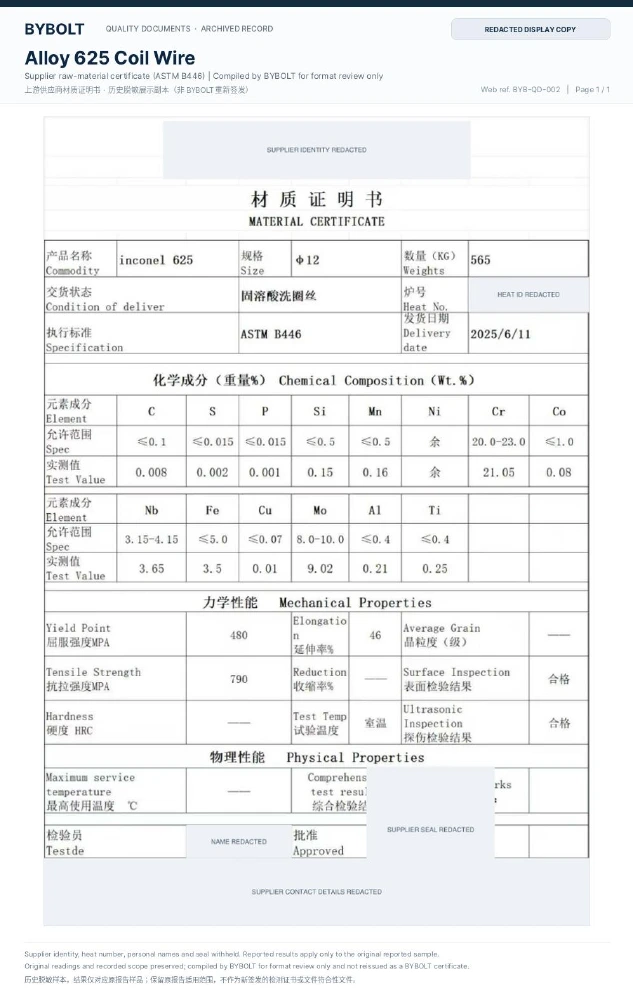
Material certificate
Inconel 625 · historical coil-wire sample
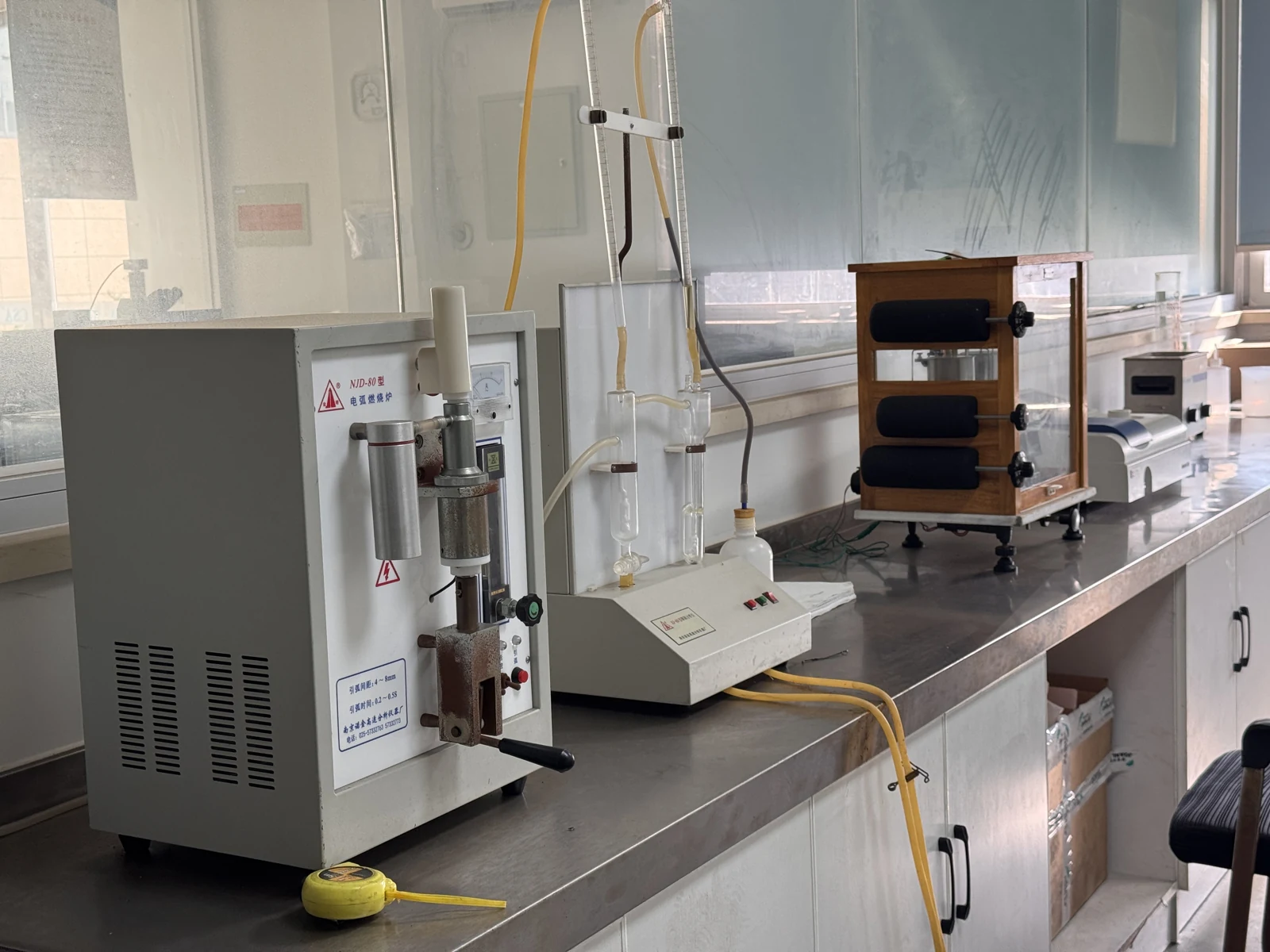
Laboratory report
Inconel 718 · chemistry, tensile & hardness
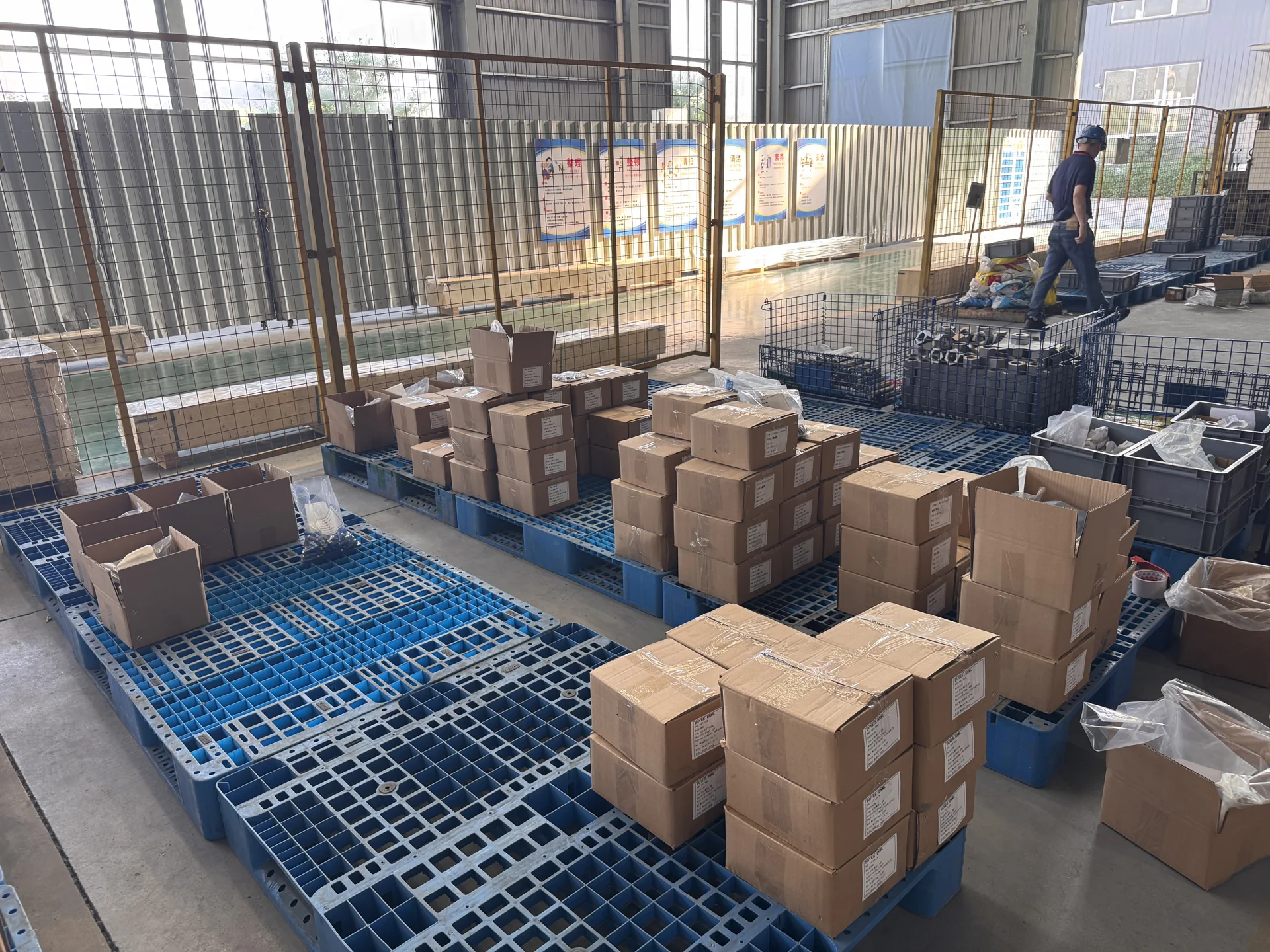
Identified packing
Heat and batch records linked to the shipment
Additional inspection requirements +
PMI, third-party inspection and witness testing are available by order. Project inspection plans can include UT/PT and heat-treatment records.
Matching products for split lock washers
Prepare your enquiry
- Material
- Grade / UNS · Condition
- Size
- Bore · Diameter · Thickness
- Geometry
- Profile · Free height
- Quantity
- Pieces per size