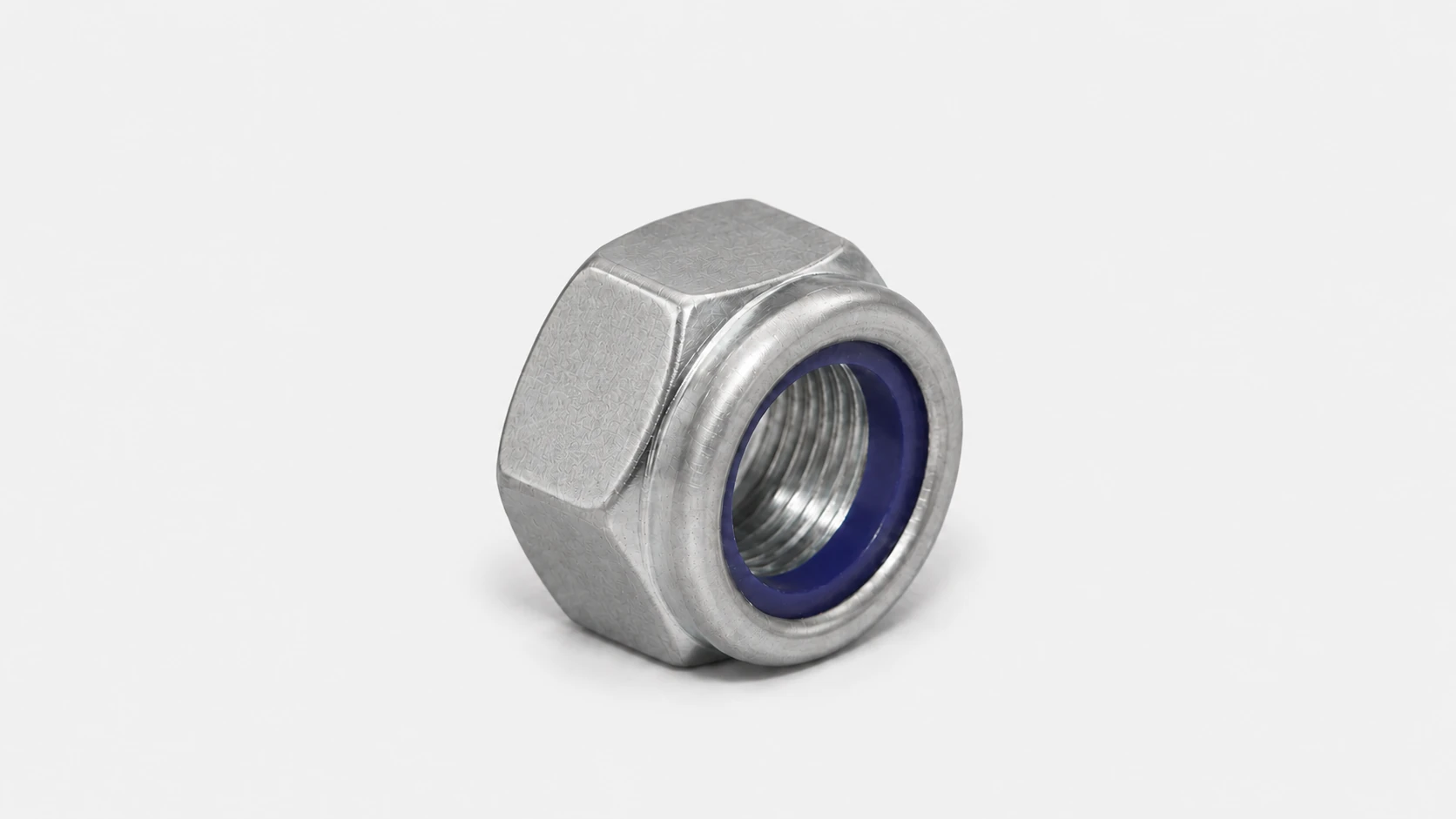
Special alloy nylon-insert lock nuts
For equipment assemblies using prevailing-torque locking, both the nut body and polymer insert must suit the service. A corrosion-resistant body addresses metal exposure; the insert material governs compatibility with temperature, process chemicals and the intended reuse cycle.
- Locking element
- Nylon insert
- Drive
- External hex
- Threads
- Metric · Inch
- Service limit
- Controlled by the insert
- Materials
- Nickel alloys · Stainless steels
EN 10204 3.1 MTC · Heat traceability
Nylon-insert lock nuts material selection
Equipment & applications
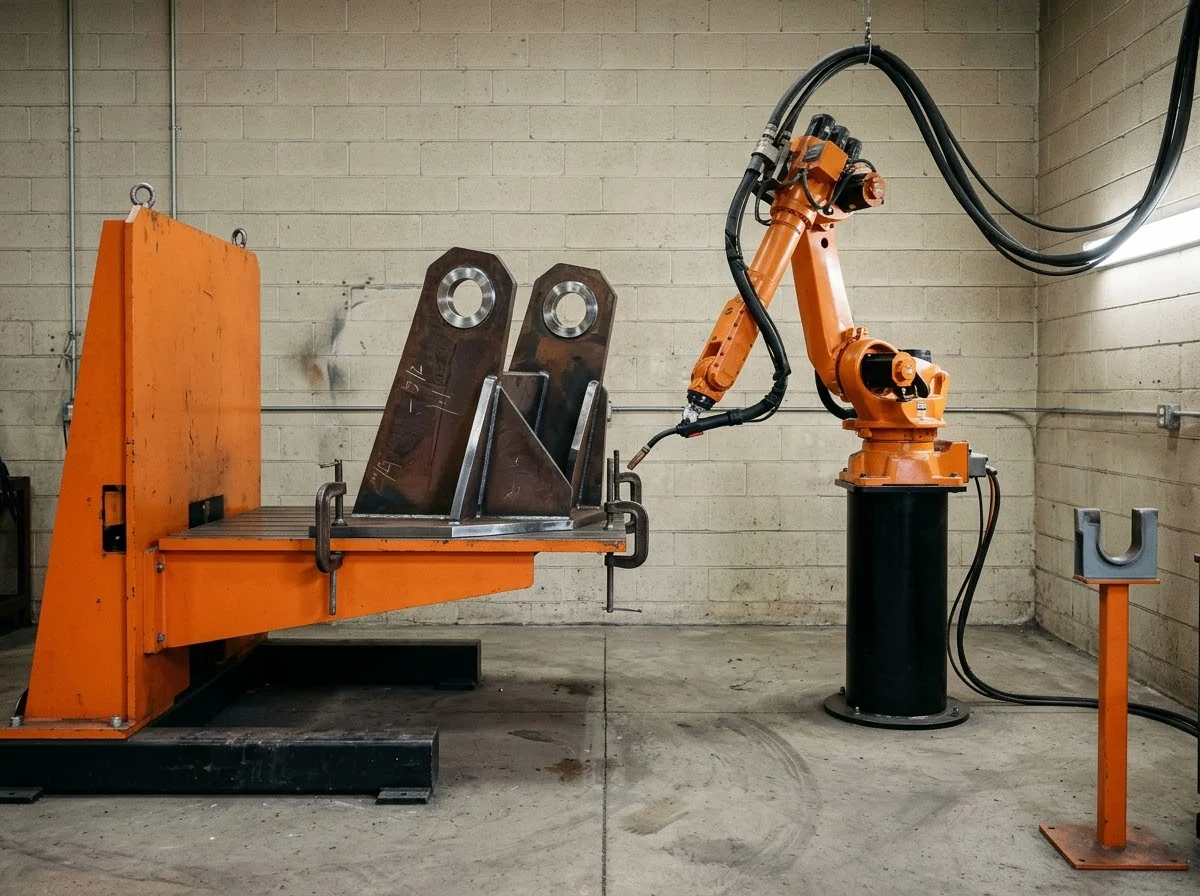
Robot peripherals
Retain bracket bolts on robot peripherals with prevailing torque from the insert. These positions keep the polymer away from hot tooling and direct process chemicals.
Packaging machinery
Secure guards and auxiliary brackets on packaging machines. The insert adds resistance to free rotation on the thread, including before the nut seats against the bracket.
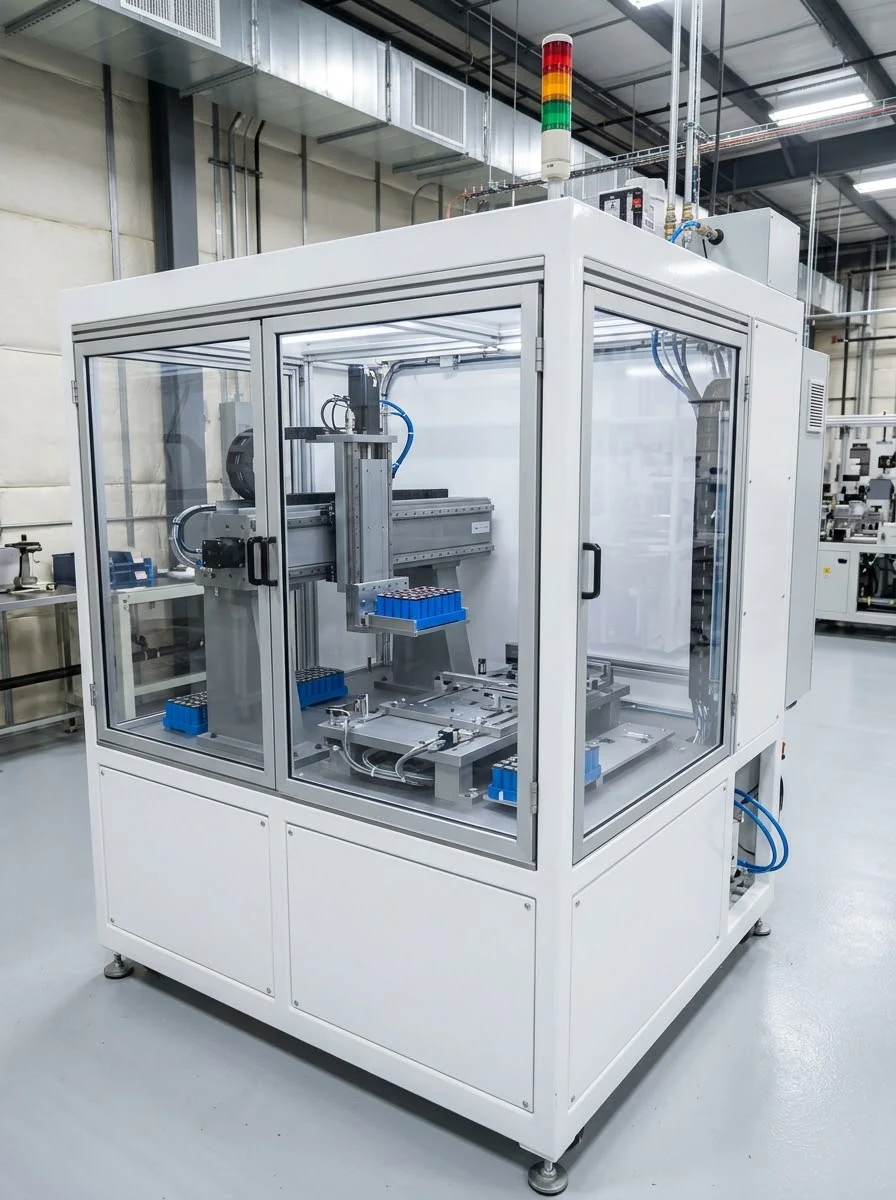
Assembly tooling
Retain removable bracket bolts on assembly jigs. Insert condition and measured prevailing torque determine suitability after repeated removal and refitting.
Nylon-insert lock nuts configurations & dimensions
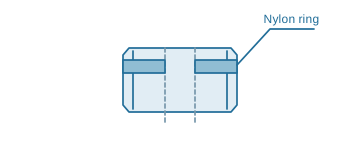
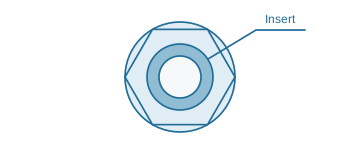
Nylon insert
Use where a prevailing-torque nut helps retain an adjustment or mounting connection without a separate locking part. The bolt must engage through the nylon ring for the insert to act.

Metal body
The metal threads carry the axial clamp load. Select the body pattern and strength for that load, then check the additional running torque from the insert when setting the tightening process.
Temperature & chemicals
Choose this form for equipment temperatures and chemicals compatible with the insert. A nickel-alloy body does not make nylon suitable for furnace service; use an all-metal locking arrangement for elevated-temperature joints.
Dimension guide
Loading 3D model…
Drag to rotate · Scroll to zoom

Product and thread standards
Raw Material Specifications
Other Materials & Specifications
Threads · Metric
Threads · Inch
Dimension Reference
Production & heat treatment
CNC · Body & Insert Pocket
Bar machining suits short runs and special body heights. The metal thread and insert pocket are produced separately so the polymer ring is supported above the load-carrying thread.
Tapping & Insert Retention
The metal thread is tapped and gauged before the insert is installed. Closing the retaining lip holds the ring in its pocket; prevailing-torque checks verify resistance on the mating thread.
Cold Forming / Hot Forging
Small repeat nut bodies favour cold forming of ductile blanks. Larger bodies and resistant alloys favour hot forging followed by pocket machining. Forming and heat processing are completed before the polymer insert is fitted.
Heat Treatment Before Assembly
Inconel 718 bodies can be solution treated and aged to develop strength; C-276 bodies can be solution annealed after heavy forming. The nylon ring is installed afterwards to avoid thermal damage. Finished checks cover metal-thread fit, insert retention and prevailing torque.
Testing, MTC 3.1 & material traceability
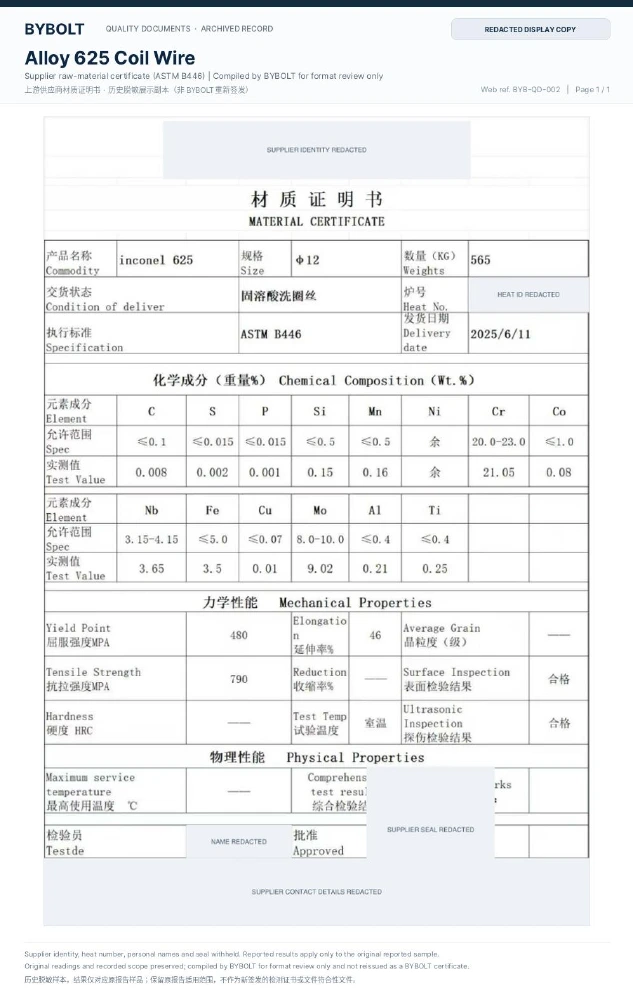
Material certificate
Inconel 625 · historical coil-wire sample

Laboratory report
Inconel 718 · chemistry, tensile & hardness
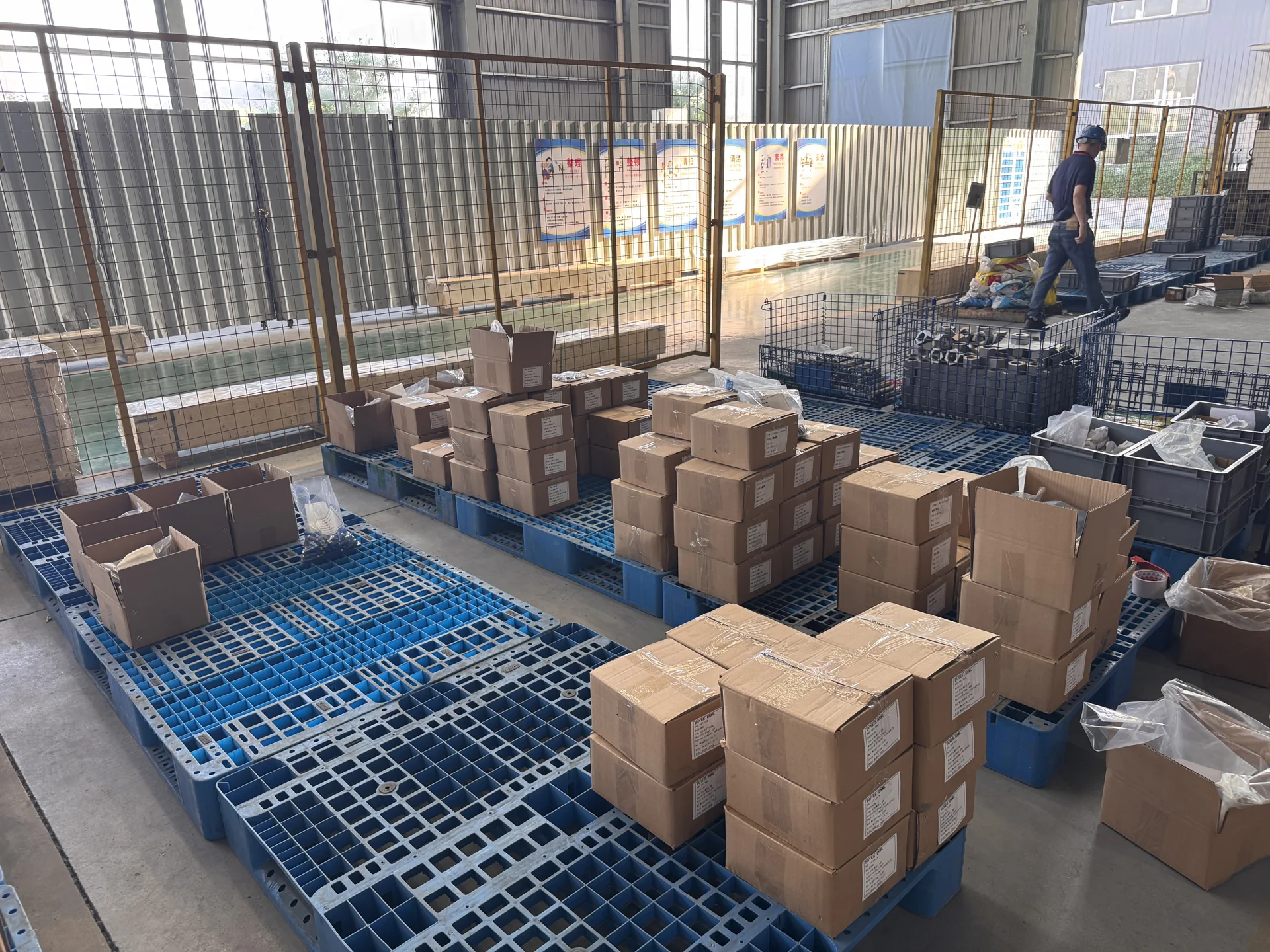
Identified packing
Heat and batch records linked to the shipment
Additional inspection requirements +
PMI, third-party inspection and witness testing are available by order. Project inspection plans can include UT/PT and heat-treatment records.
Matching products for nylon-insert lock nuts
Prepare your enquiry
- Material
- Grade / UNS · Condition
- Size
- Diameter · Length / height
- Thread
- Pitch / TPI · Form & class
- Quantity
- Pieces per size