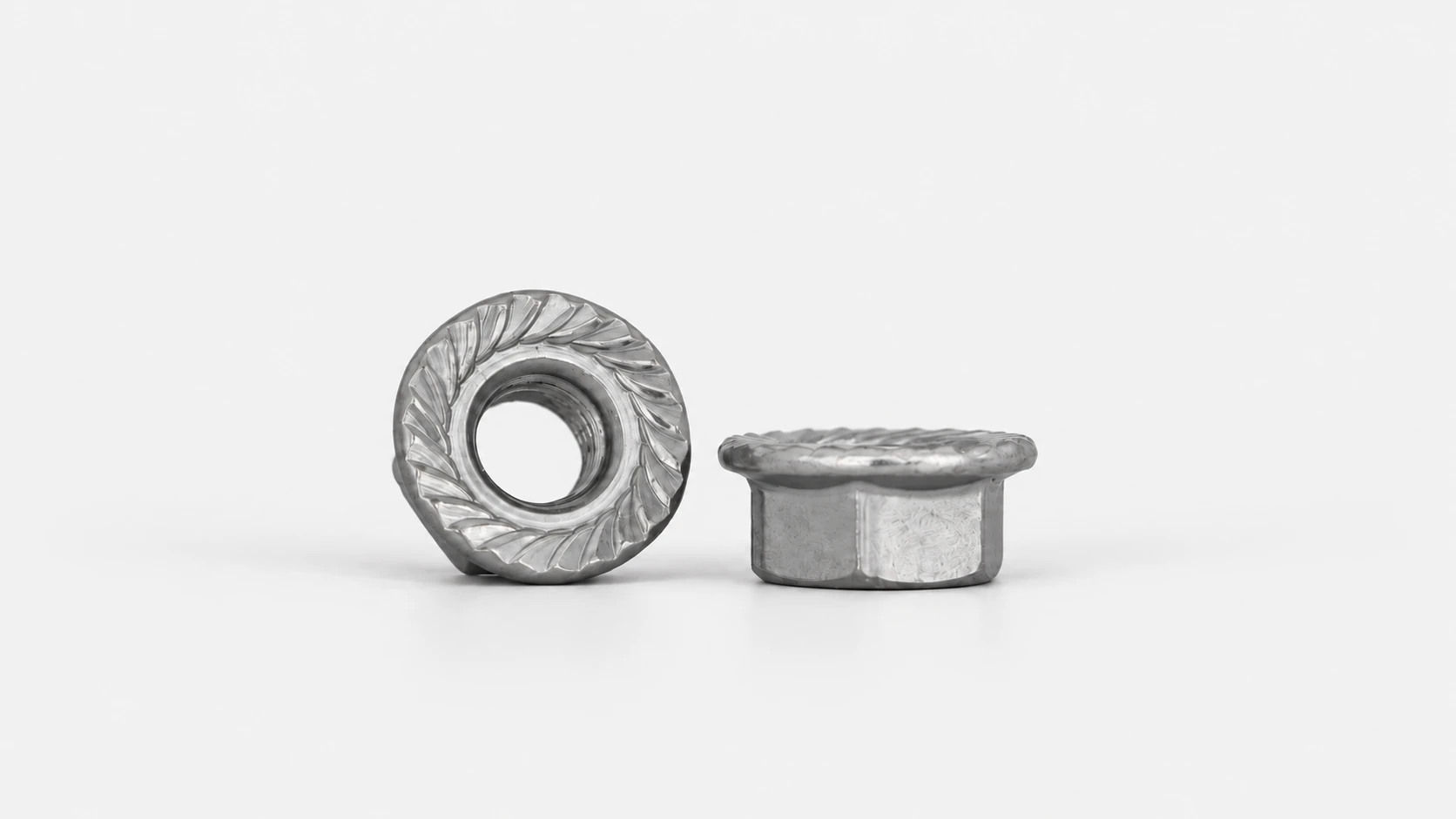
Special alloy serrated flange nuts
Serrated flange nuts combine a broad bearing seat with teeth that engage the component surface. They suit joints designed for that contact: surface hardness, coating and acceptable marking determine whether the serrated seat is appropriate.
- Bearing face
- Serrated flange
- Drive
- External hex
- Threads
- Metric · Inch
- Key dimensions
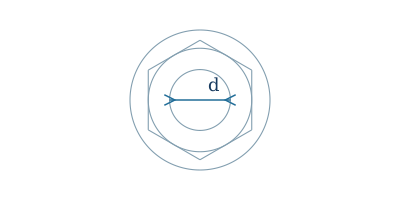
- Flange diameter · Nut height
- Materials
- Nickel alloys · Duplex steels · Titanium
EN 10204 3.1 MTC · Heat traceability
Serrated flange nuts material selection
Equipment & applications
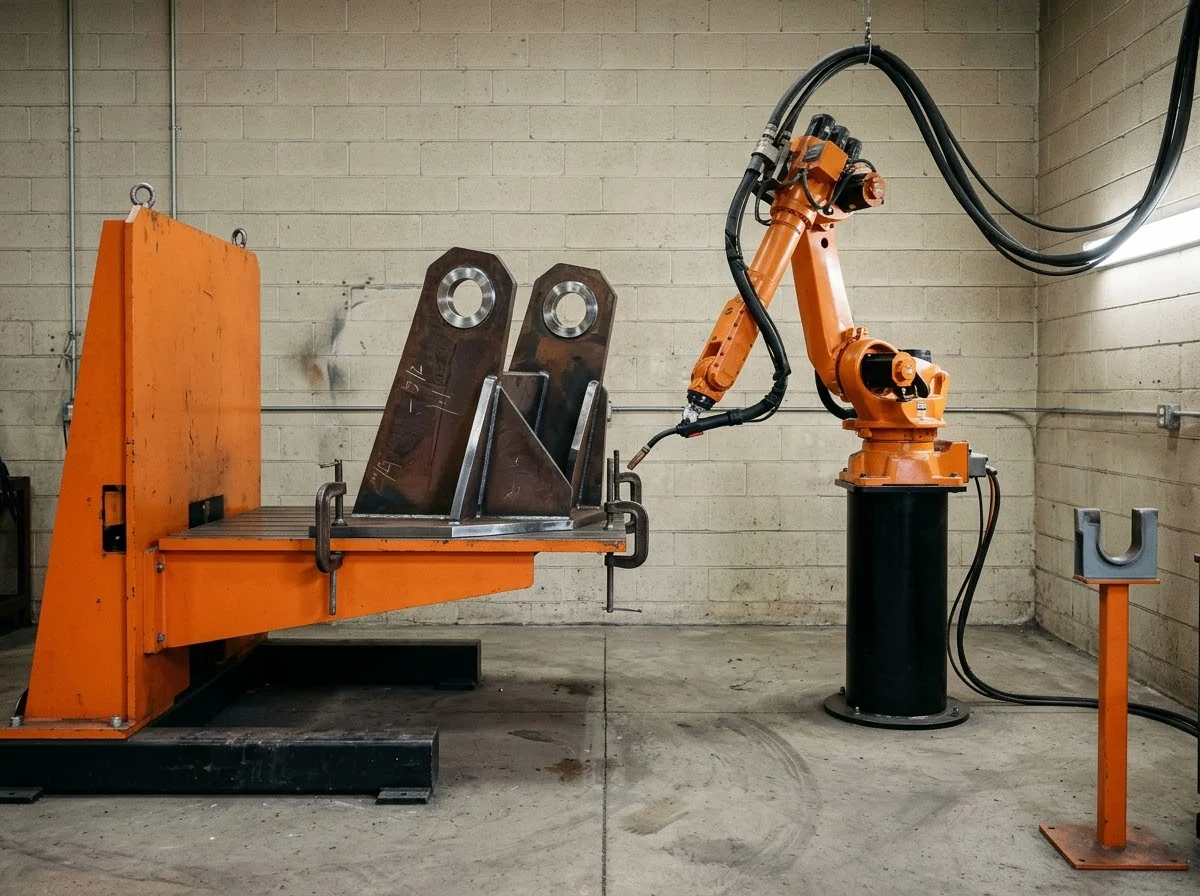
Robot peripherals
Fasten metal brackets on robot peripherals. The flange spreads contact and the serrations engage the bracket seat to resist nut rotation.
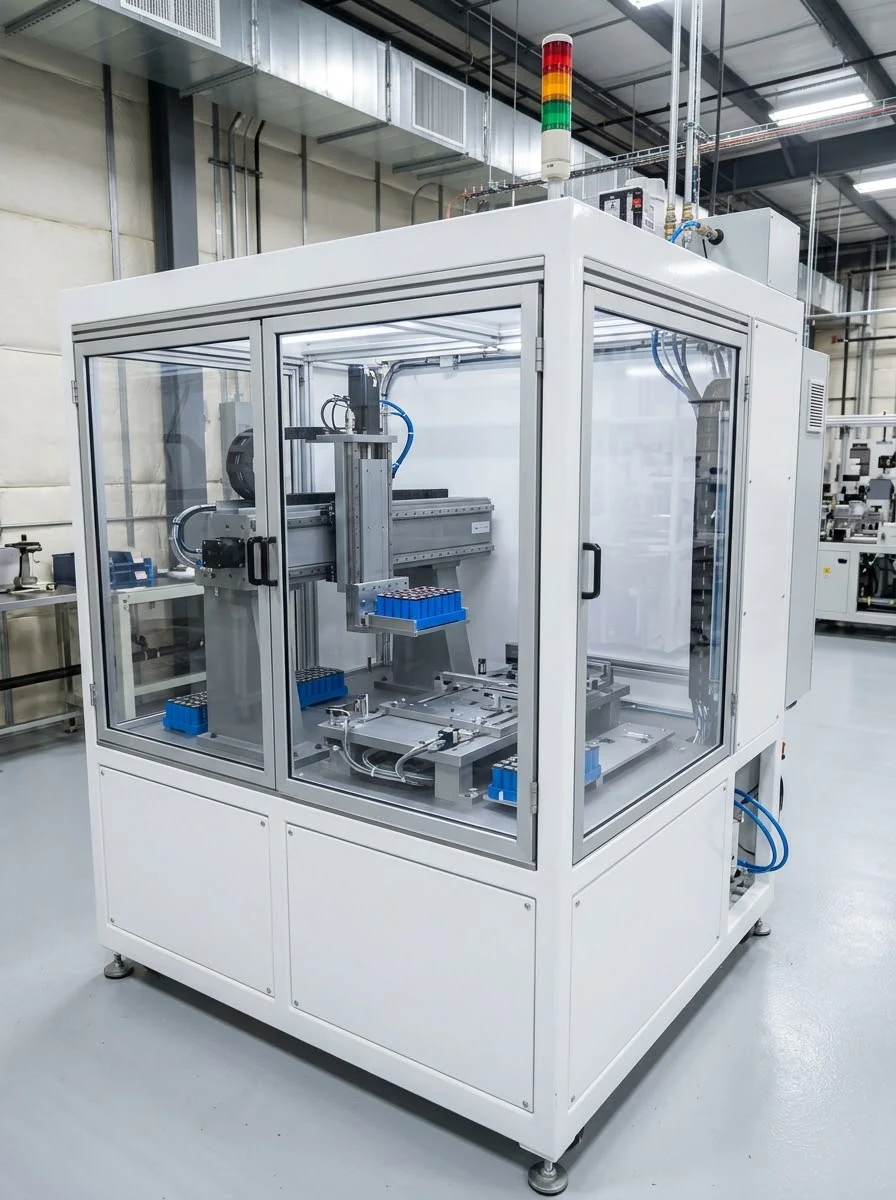
Assembly tooling
Secure metal fixture brackets during repeat assembly. The nut carries its bearing flange, reducing loose washer handling; the seat must allow the serrations to leave an impression.
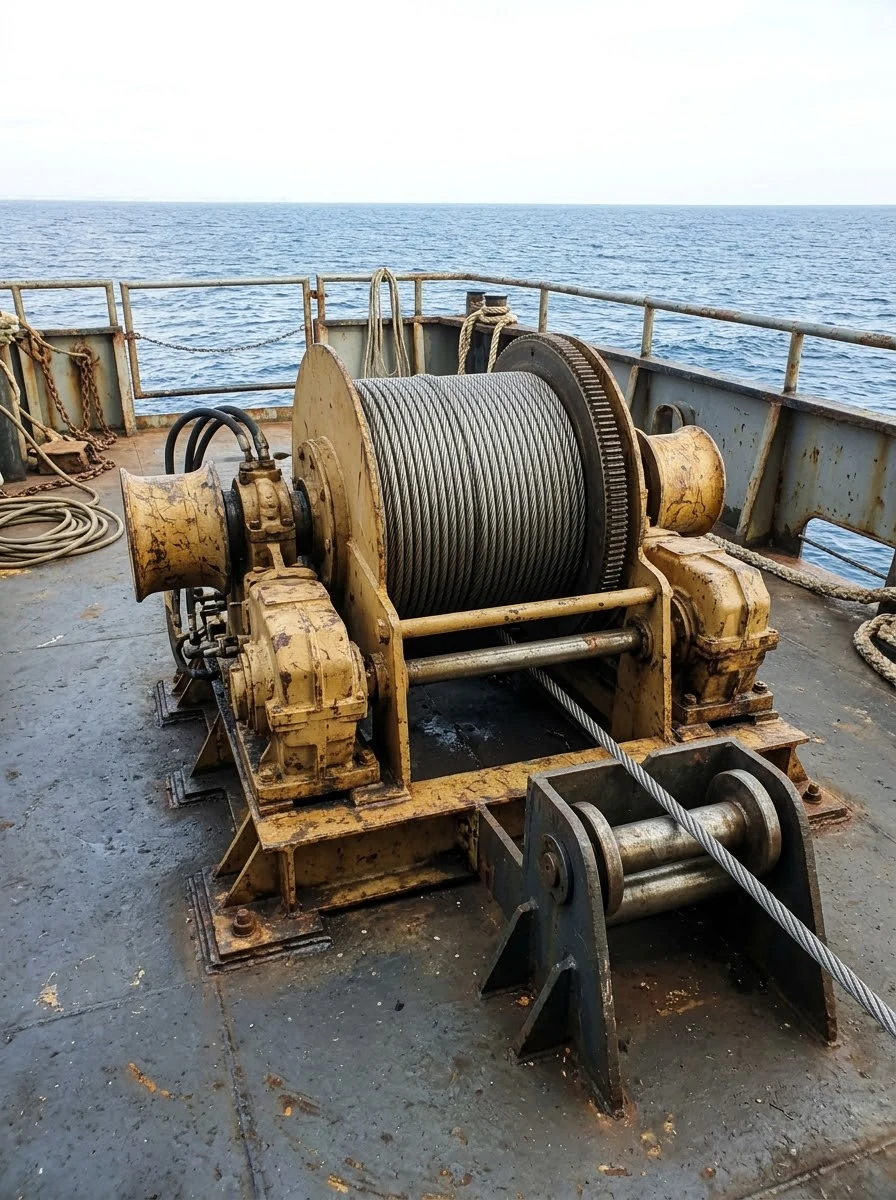
Deck equipment
Attach external equipment brackets to metal bases. Direct tooth contact suits unprotected bearing seats; coated or finished faces may need a plain-flange arrangement instead.
Serrated flange nuts configurations & dimensions
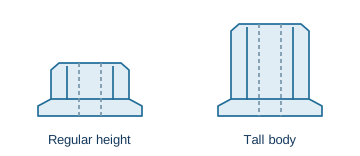
Body height: regular / tall
- Regular height
- Fits compact equipment covers and mounting brackets where clearance above the nut is limited.
- Tall body
- Provides longer thread engagement on clamping studs in jigs, fixtures and machine-tool setups that are tightened and released repeatedly.
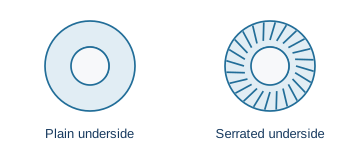
Bearing face: plain / serrated
- Plain face
- For painted covers and finished equipment faces where serration marks are unwanted.
- Serrated face
- For metal mounting brackets where teeth can bite directly into the seat to resist rotation.
All configurations shown are available on request.
Dimension guide
Loading 3D model…
Drag to rotate · Scroll to zoom
Product and thread standards
Raw Material Specifications
Other Materials & Specifications
Threads · Metric
Threads · Inch
Dimension Reference
Production & heat treatment
CNC · Flange & Teeth
Short-run blanks are machined from bar, including the flange seat and serration pattern. Flange diameter and tooth geometry can be adapted to a particular mounting face.
Threads & Serration Finish
The internal thread is gauged after tapping. Serrations are checked for consistent engagement around the flange; damaged or uneven teeth concentrate contact instead of distributing it across the seat.
Cold Forming / Hot Forging
Small repeat flange nuts favour cold forming with dies that shape the body and flange. Wide flanges or resistant alloys favour hot-forged blanks, followed by finishing the seat, teeth and internal thread.
Heat Treatment & Bearing Contact
Ageing strengthens solution-treated Inconel 718 nut bodies and serrations. C-276 solution annealing restores corrosion resistance after heavy forming. Hardness matters at the teeth as well as the thread, because the serrations need to engage the mating surface.
Testing, MTC 3.1 & material traceability
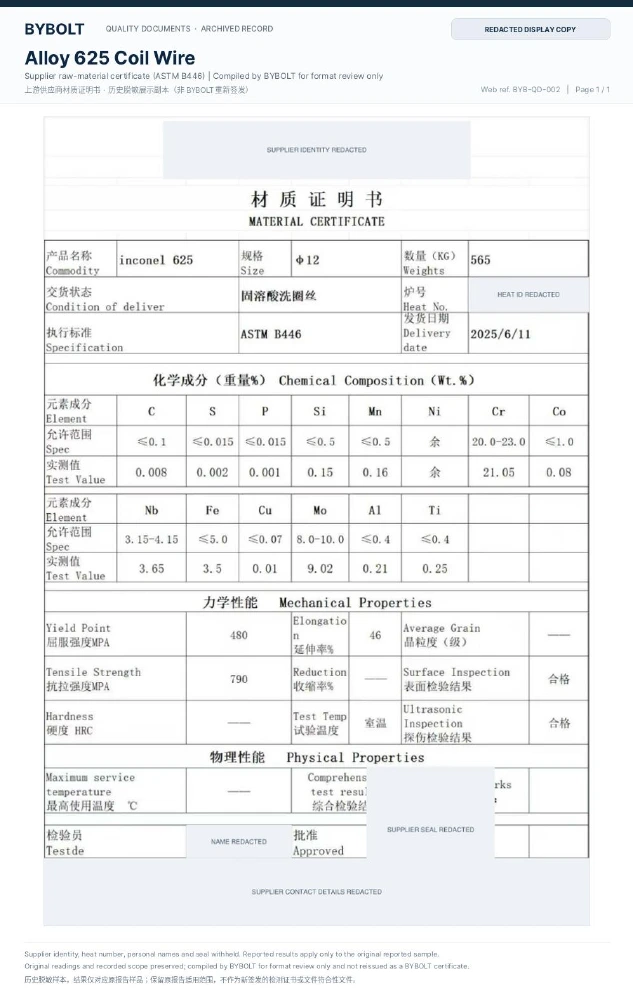
Material certificate
Inconel 625 · historical coil-wire sample
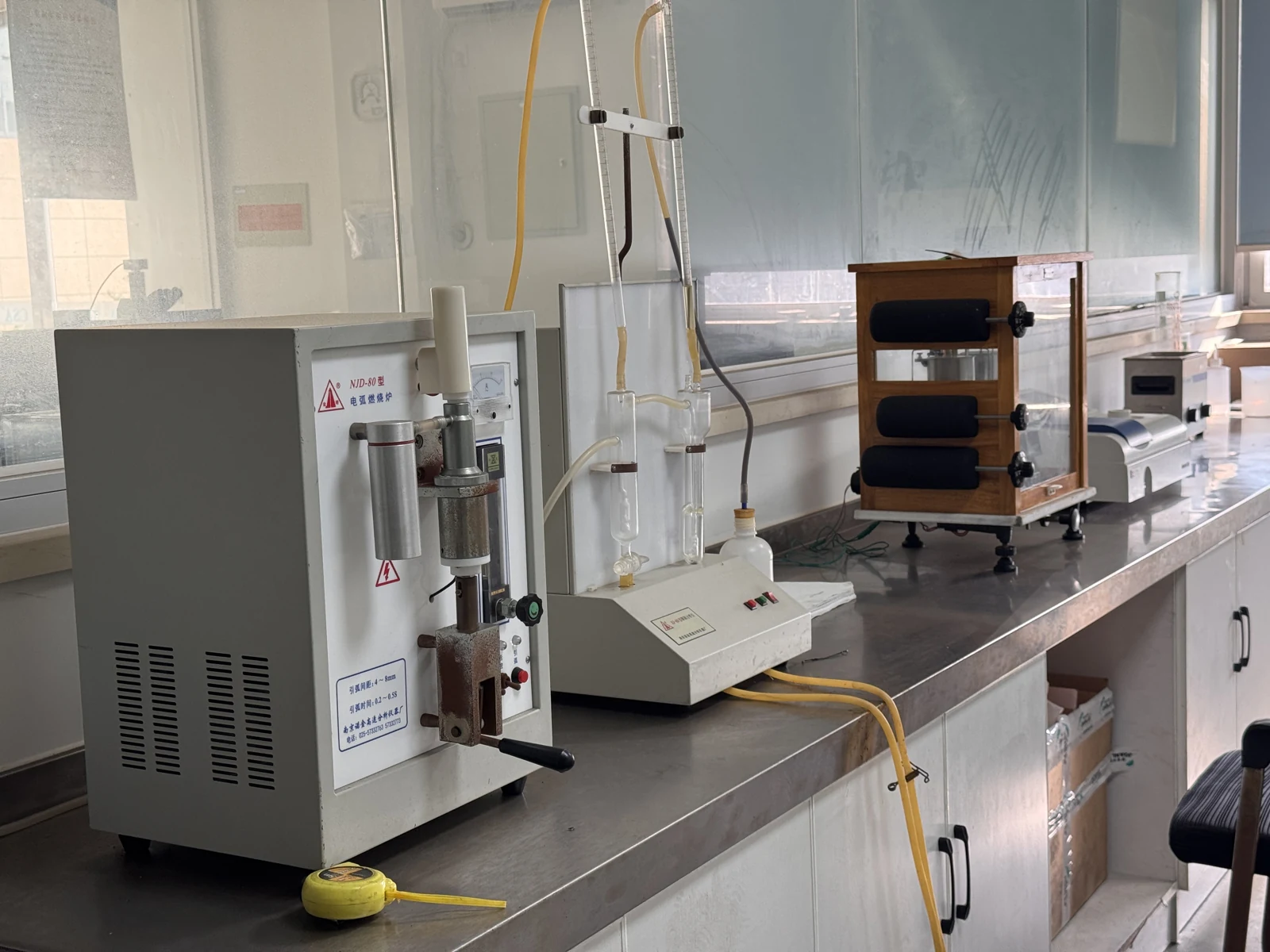
Laboratory report
Inconel 718 · chemistry, tensile & hardness
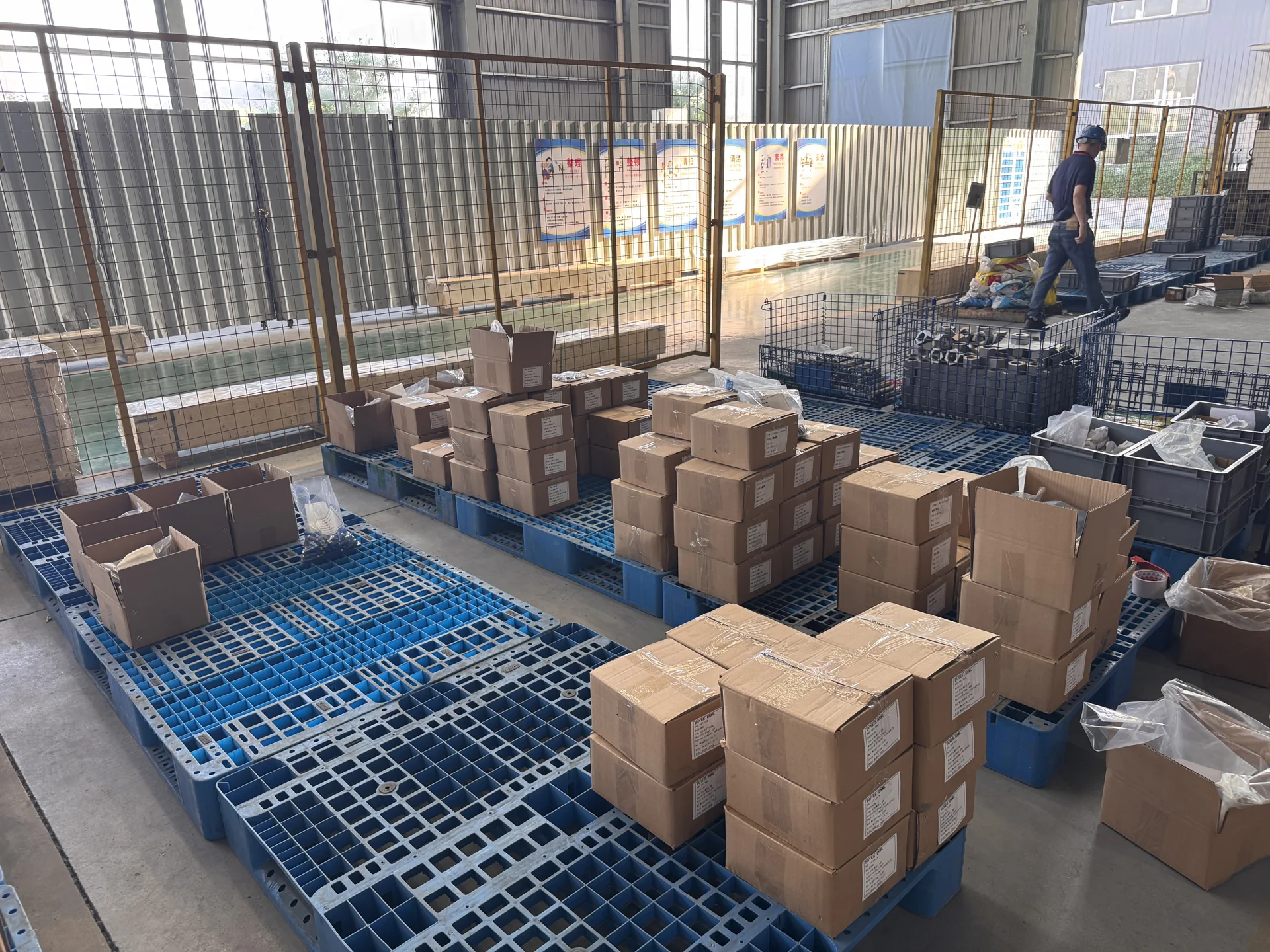
Identified packing
Heat and batch records linked to the shipment
Additional inspection requirements +
PMI, third-party inspection and witness testing are available by order. Project inspection plans can include UT/PT and heat-treatment records.
Matching products for serrated flange nuts
Prepare your enquiry
- Material
- Grade / UNS · Condition
- Size
- Diameter · Length / height
- Thread
- Pitch / TPI · Form & class
- Quantity
- Pieces per size