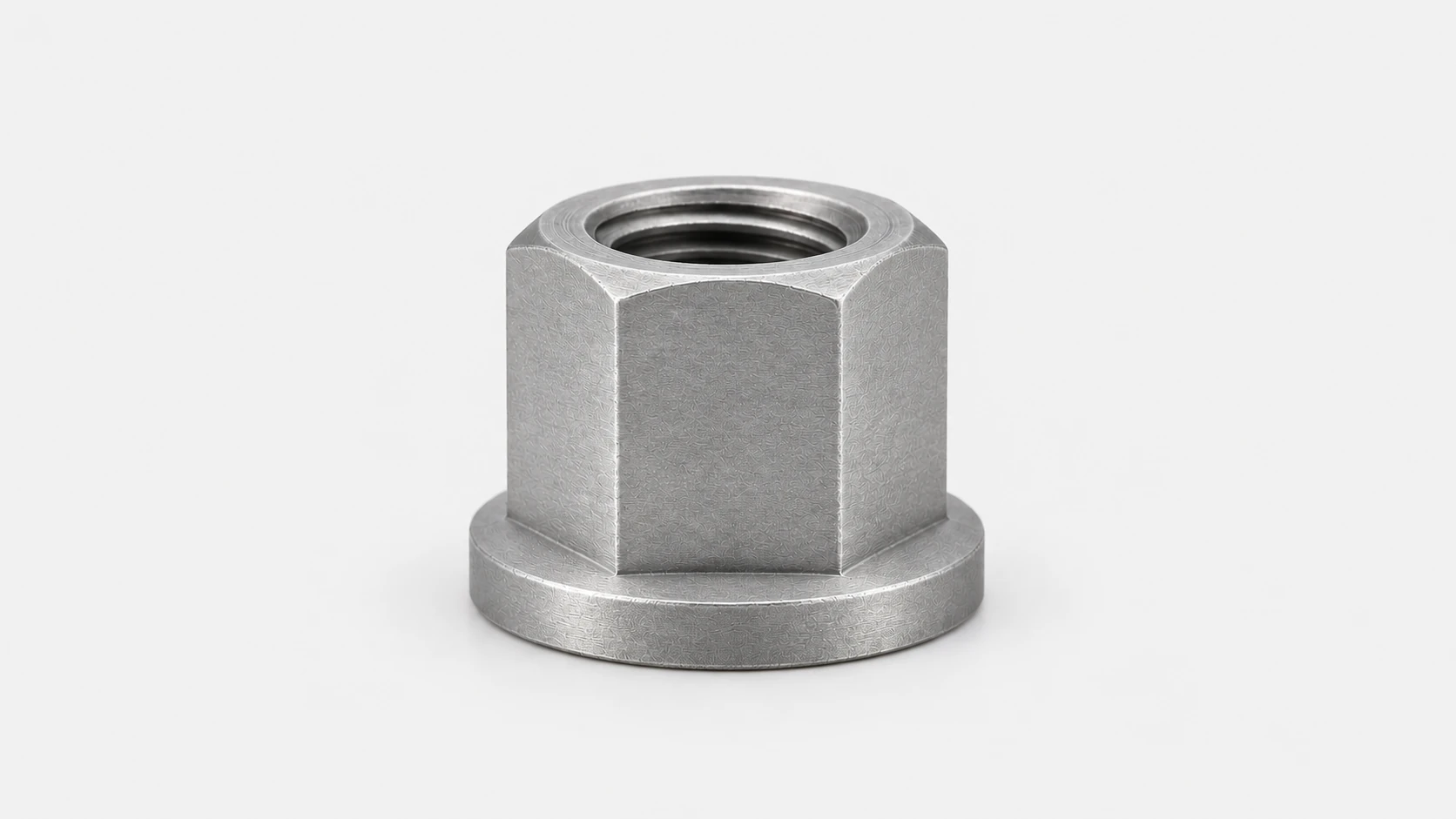
420 Tall flange nuts
ISO 4161
A tall 420 flange nut extends the usable thread envelope and spreads the seating load. The grade brings hardness and wear resistance at mechanical contact points, while engagement depth and flange contact determine the assembled fit.
- MOQ
- 100PCS
- Samples · typical
- ~20 days
- Production · typical
- 25–35 days
- Heat treatment
- Annealed / hardened and tempered
EN 10204 3.1 MTC + heat-number traceability
Which standard is on your order?
Raw Material Specifications
Threads · Metric
Threads · Inch
Dimension Reference
Heat Treatment
Hardened and temperedHardening forms the load-bearing martensitic structure, then tempering adjusts hardness and toughness to the specified final condition.
What we can make in 420
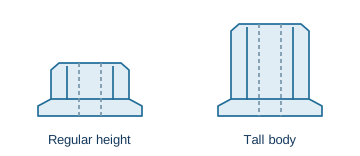
Body height: regular / tall
- Regular height
- Fits compact equipment covers and mounting brackets where clearance above the nut is limited.
- Tall body
- Provides longer thread engagement on clamping studs in jigs, fixtures and machine-tool setups that are tightened and released repeatedly.

Bearing face: plain / serrated
- Plain face
- For painted covers and finished equipment faces where serration marks are unwanted.
- Serrated face
- For metal mounting brackets where teeth can bite directly into the seat to resist rotation.
All configurations shown are available on request.
- Body
- Extended height
- Bearing
- Integral flange
- Threads
- Metric · Inch
- Key dimensions
- Height · Flange diameter · Across flats
- Final condition
- Annealed · hardened and tempered
- Inspection
- Height · Flange diameter · Thread engagement · Gauging
Manufacturing route
Small lots use machined blanks. Volume nut blanks use a forming route compatible with the alloy before machining the bore and tapping.
Heat treatment & final condition
Hardening and tempering set the final hardness and toughness. Finish dimensions are checked after heat treatment.
Finished geometry
Internal thread gauging, usable engagement and bearing-face alignment are checked after final processing.
Where 420 fits — and what matters
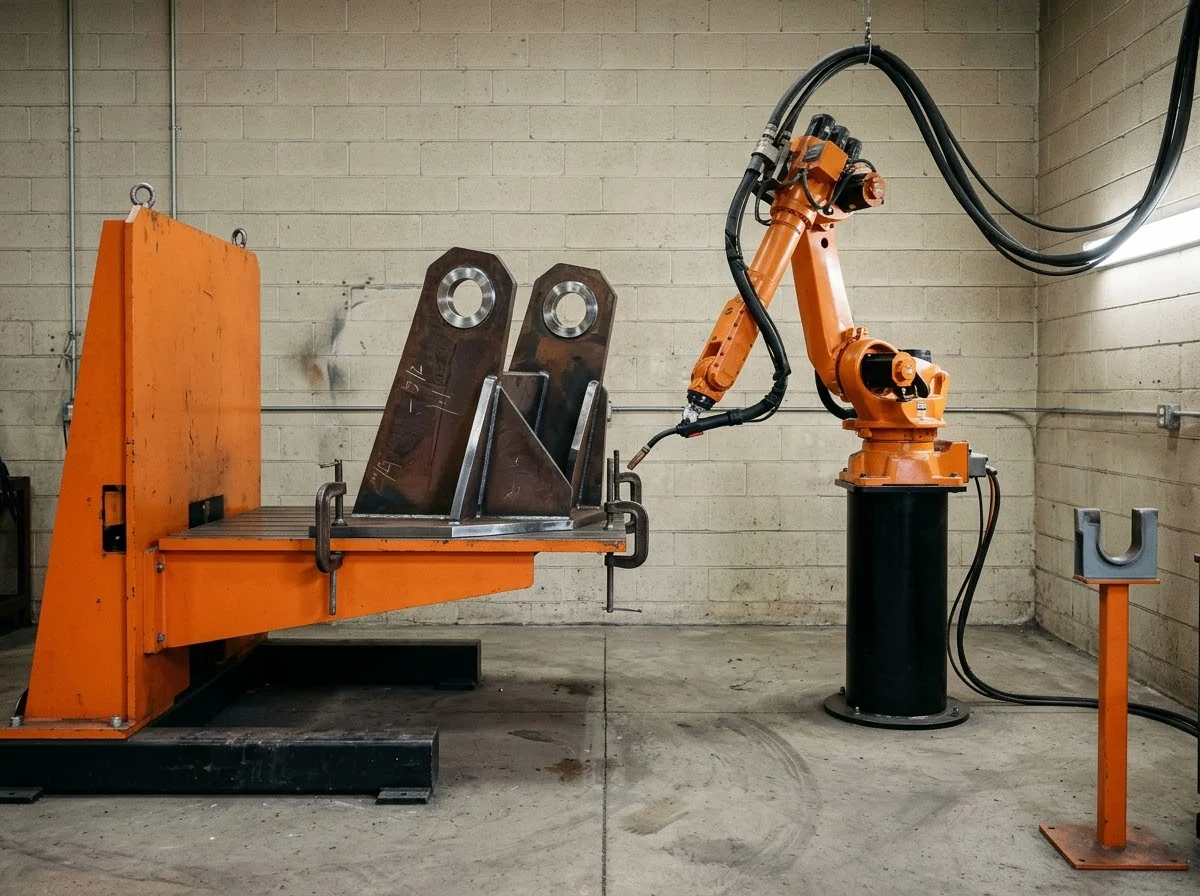
Industrial Machinery & Automation
Machine frames and positioning fixtures420 tall flange nuts retain the threaded connections on machine frames and positioning fixtures, combining increased nut height with an integral bearing flange. Alignment, operating cycles and replacement access define the working interface.
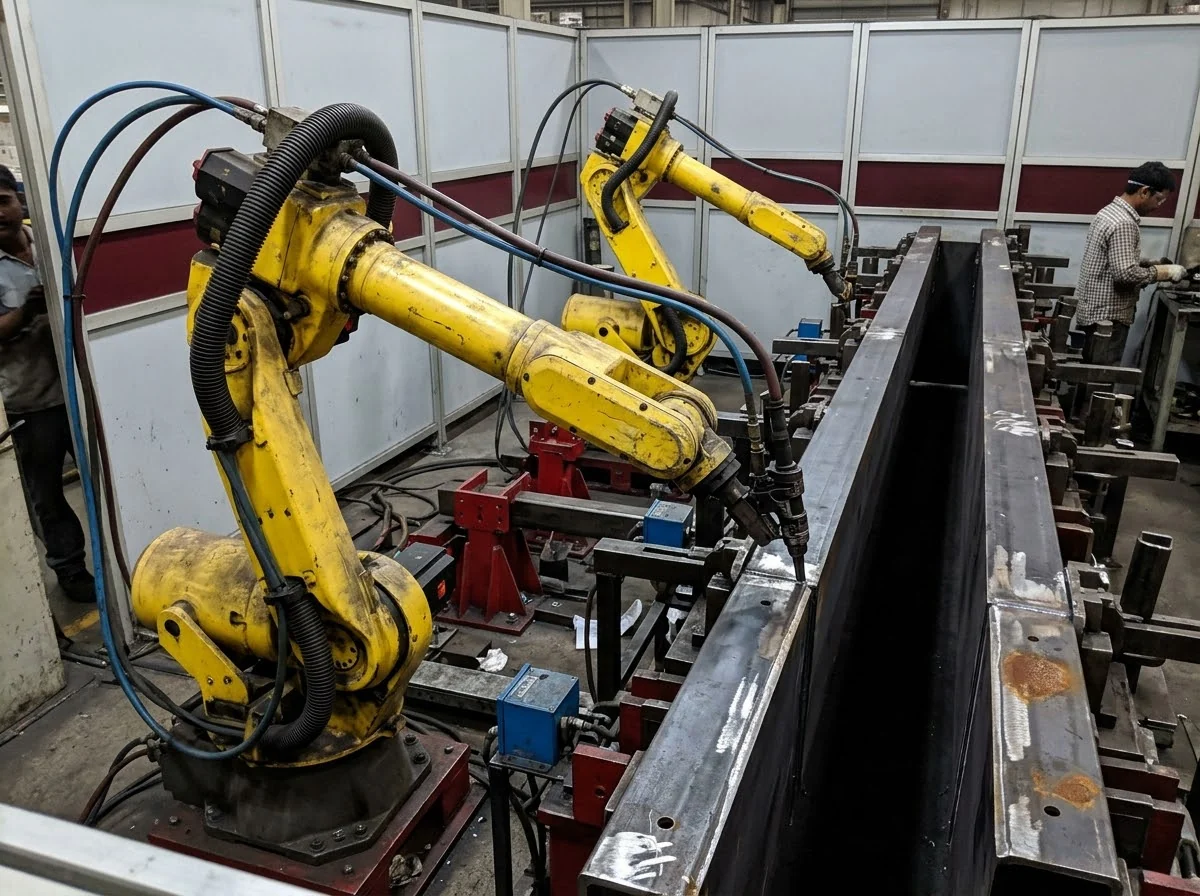
Automotive & EV Manufacturing Equipment
Assembly fixtures and test-rig frames420 tall flange nuts retain the threaded connections on assembly fixtures and test-rig frames, combining increased nut height with an integral bearing flange. Repeated tooling changes require consistent seating and repeatable assembly dimensions.
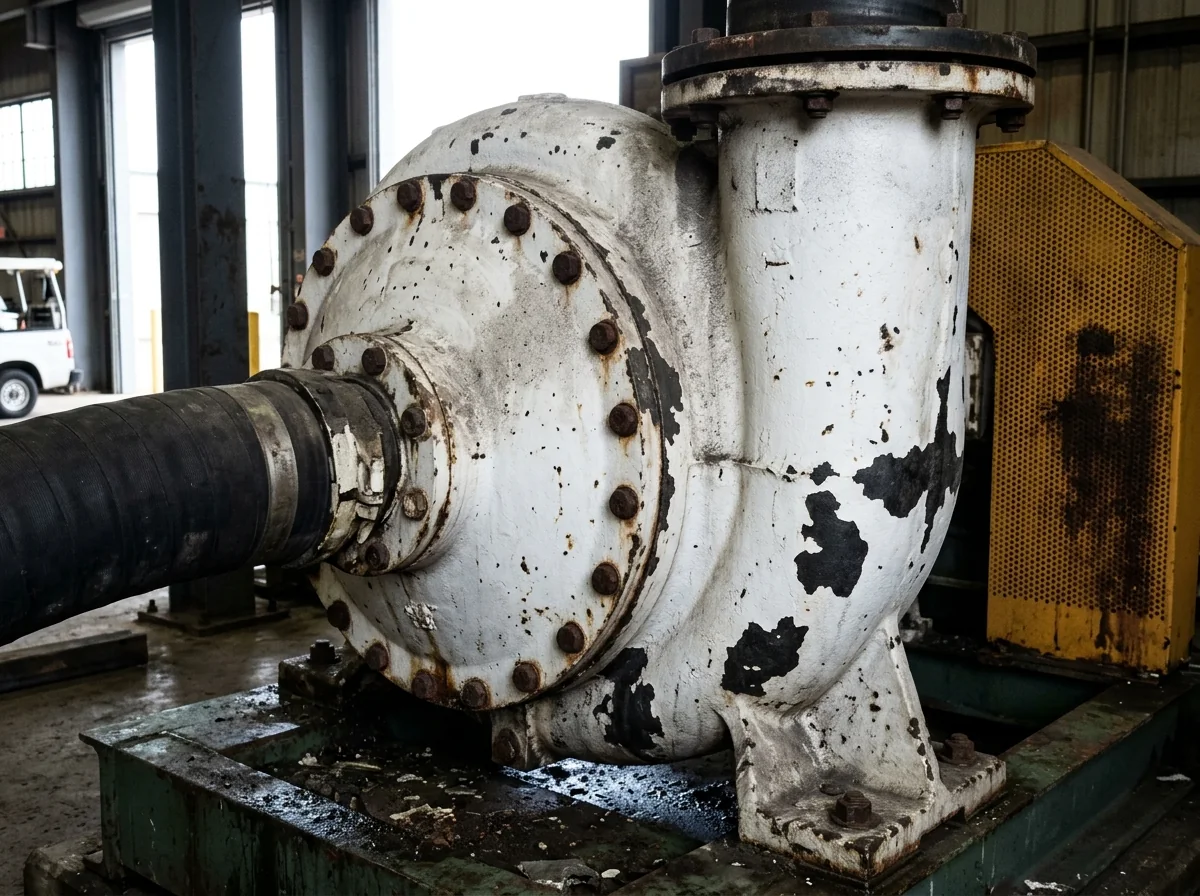
Pumps, Valves & OEM
Actuator mounts and pump baseplates420 tall flange nuts retain the threaded connections on actuator mounts and pump baseplates, combining increased nut height with an integral bearing flange. Repeated maintenance makes fit, engagement and access part of the component specification.
Same tall flange nut. Different material priorities.
420 material data316L
Molybdenum-bearing stainless performance in wet equipment.
- Connection priority
- Thread engagement over the tall body and flange bearing
- Washdown and retained cleaner
- Cleaner concentration, rinse quality and deposits determine the exposure in covered joints. The low-carbon designation does not independently establish a fastener strength class. Include liquid retained at the extended internal thread and broad flange underside in the exposure description.
17-4 PH
Aging-controlled strength and hardness.
- Connection priority
- Thread engagement over the tall body and flange bearing
- H900 versus H1150
- The aging condition changes the balance of strength, hardness and toughness. A replacement part needs the specified H condition, especially where contact wear and shock load occur together.
Inconel 625
Solid-solution strength and resistance to aggressive process liquids.
- Connection priority
- Thread engagement over the tall body and flange bearing
- Annealed or solution-annealed 625
- The delivery condition affects strength and high-temperature response. Keep the specified condition with the component’s mechanical acceptance; 718-style aging is not the strengthening route for 625. Include liquid retained at the extended internal thread and broad flange underside in the exposure description.
From drawing to documented delivery
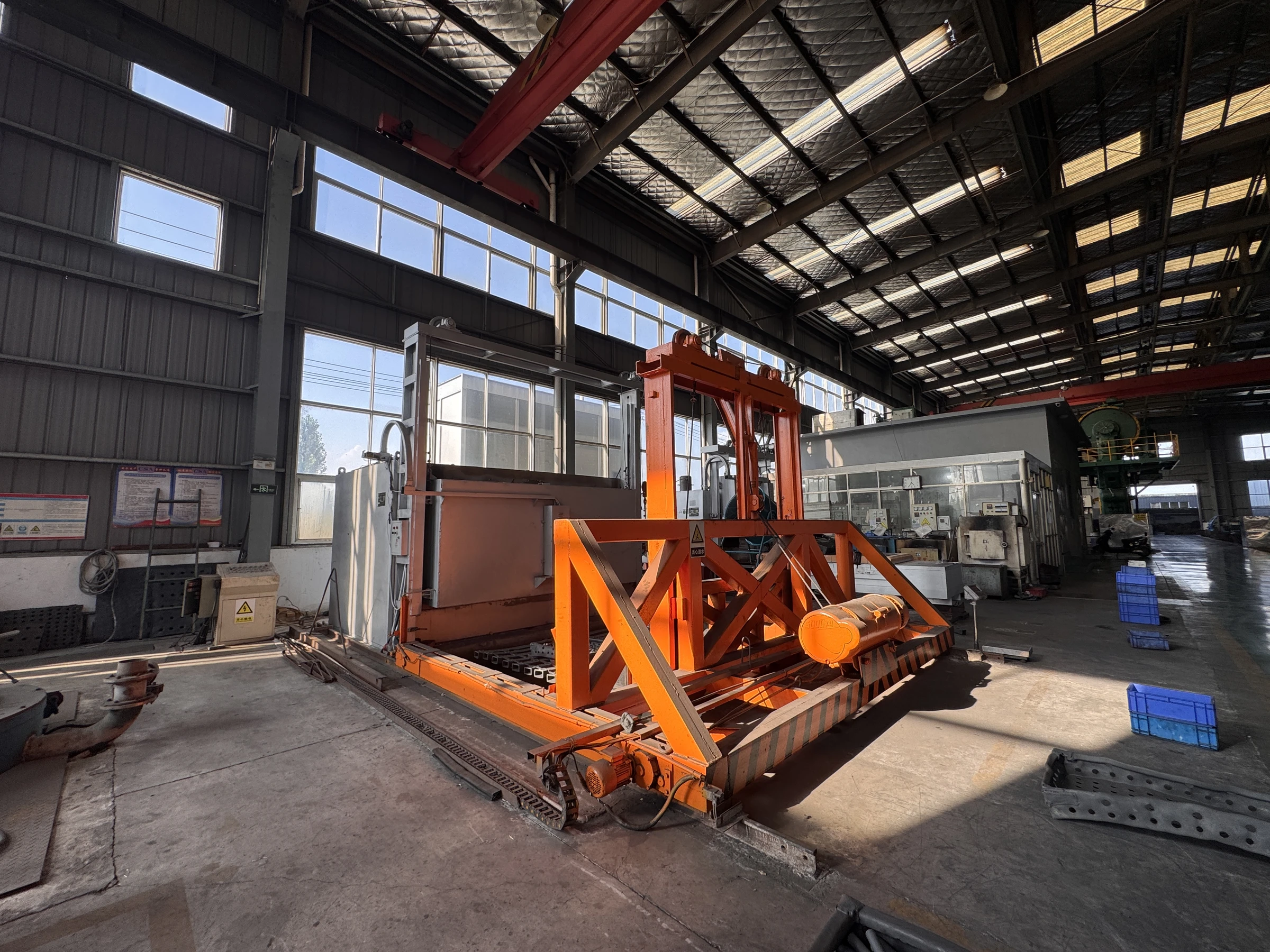
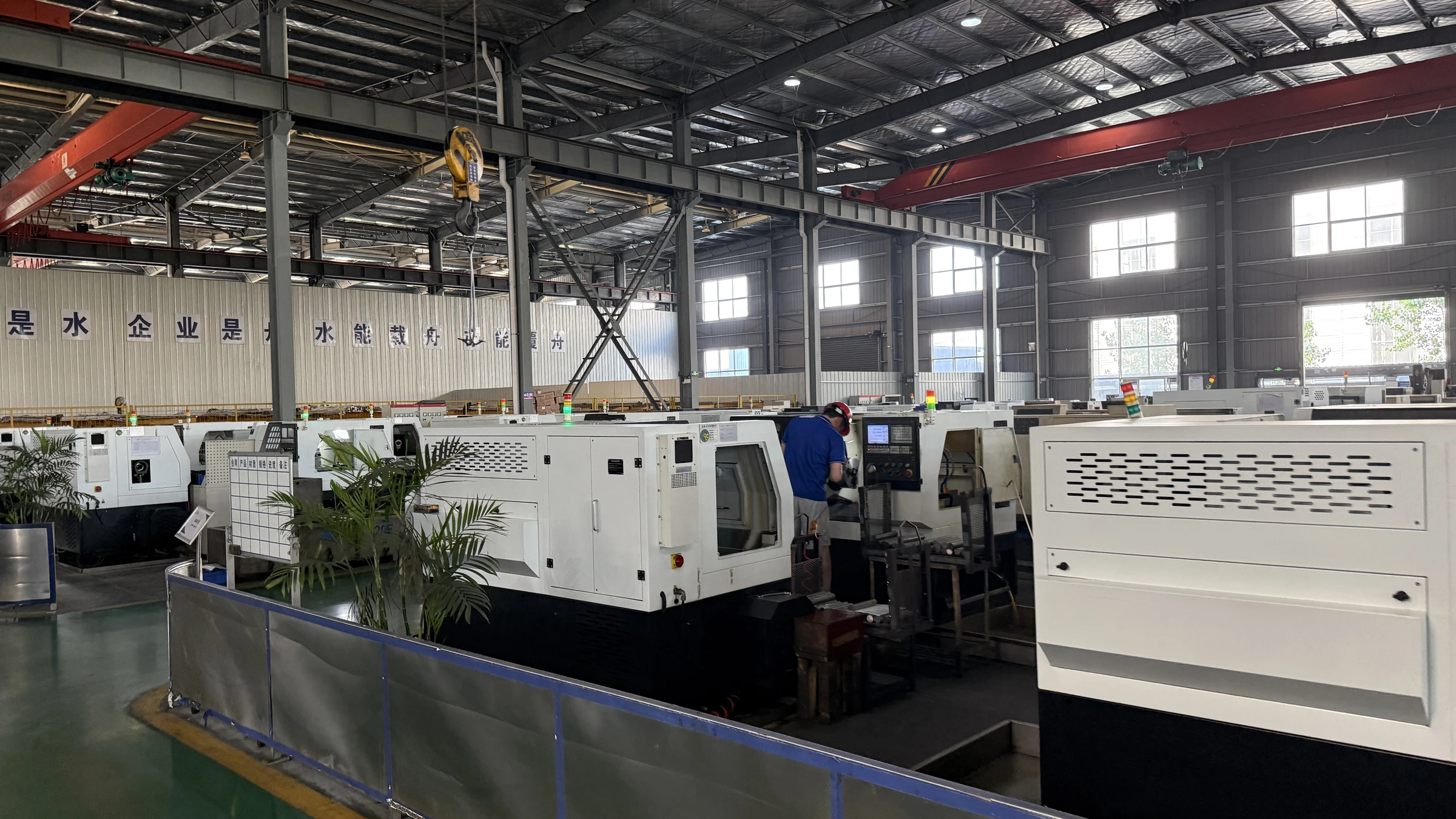
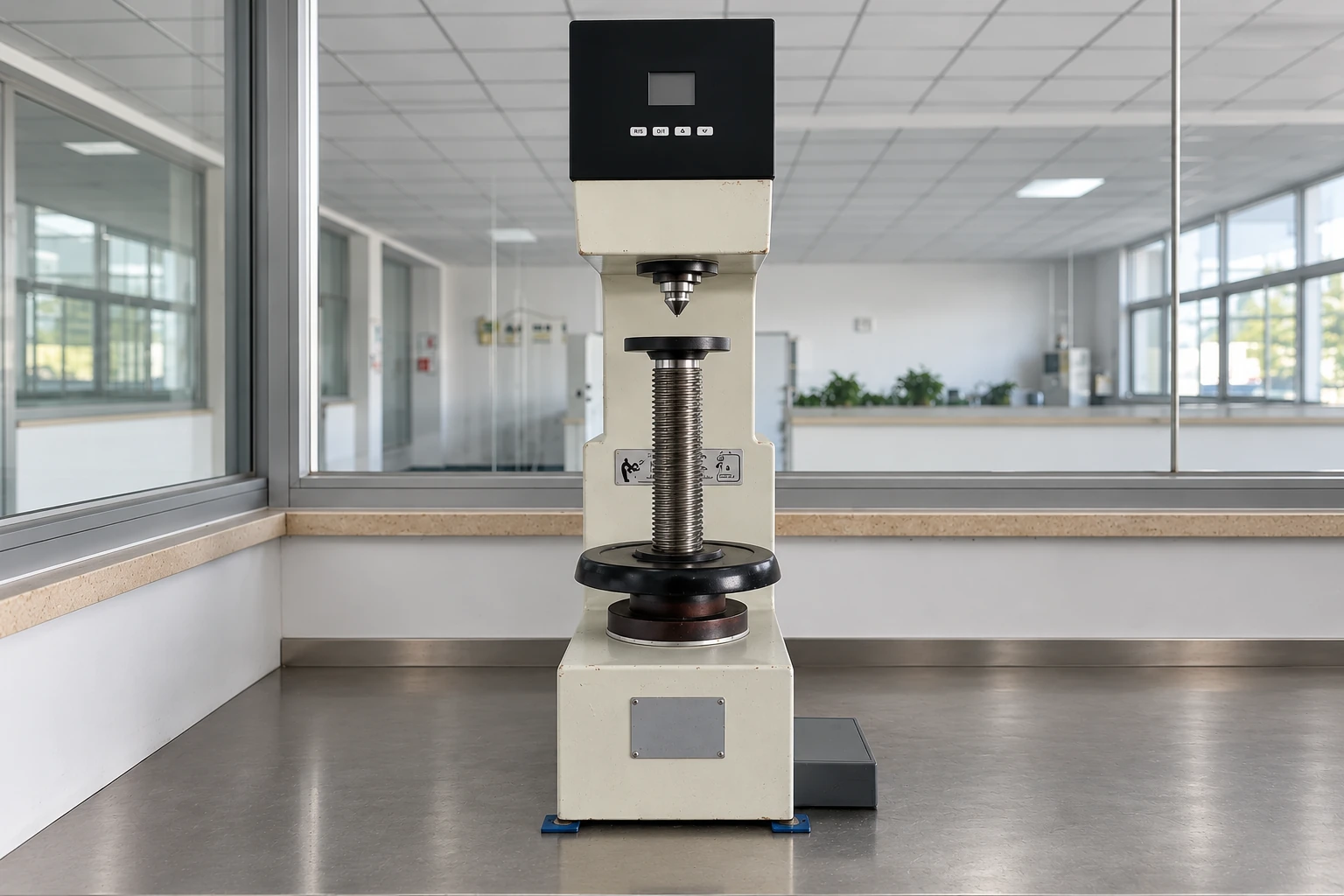
- 01Drawing & BOMForm, dimensions and quantity
- 02Material & formingGrade, heat and manufacturing route
- 03Final inspectionGeometry, threads and ordered tests
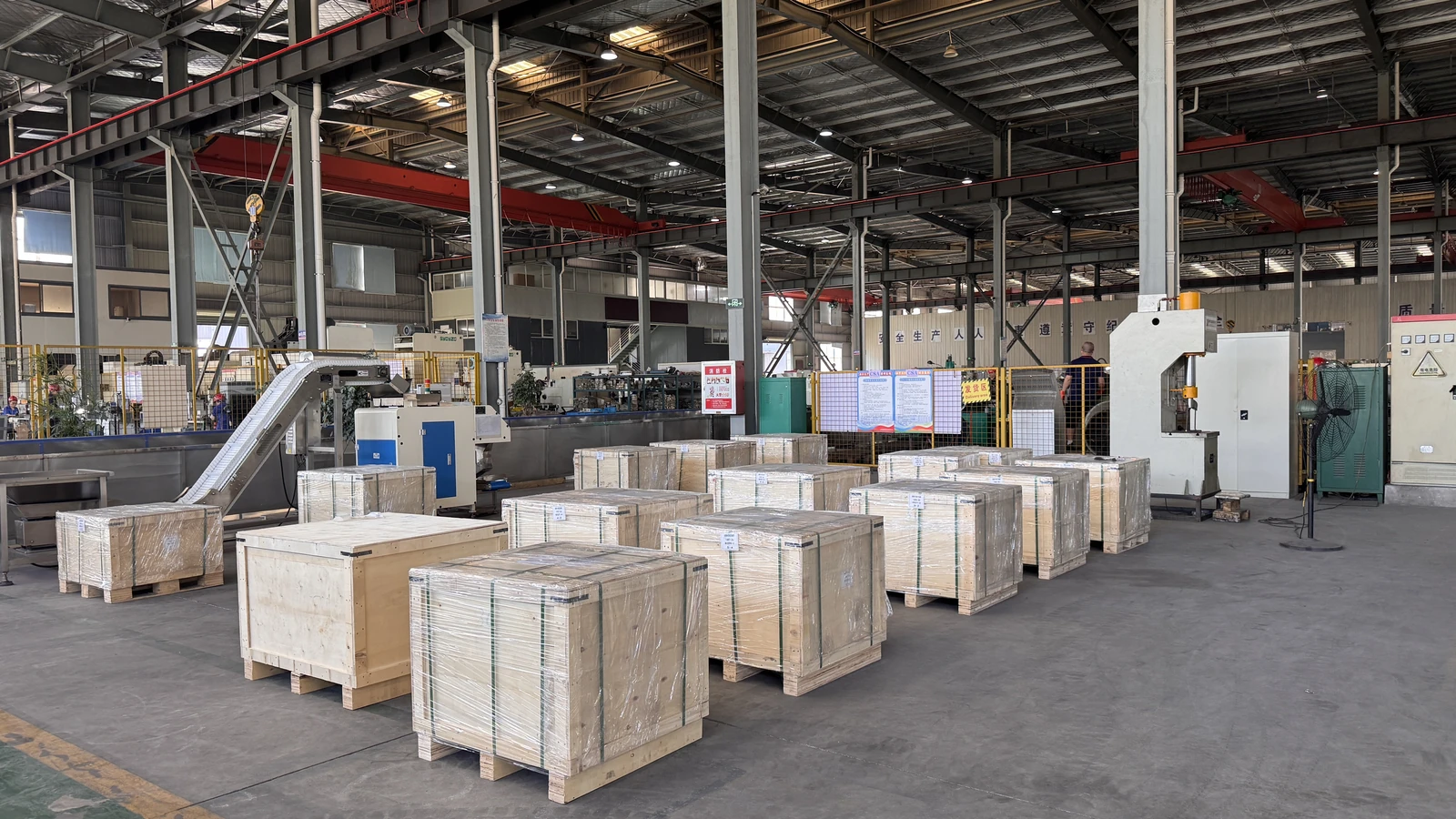
- 04Documents & dispatchLot records and identified packing
Order documents
- Material identity
- UNS S42000 · heat number · ordered condition
- Final-part acceptance
- Hardness and mechanical acceptance after hardening and tempering.
- Dimensional record
- Height · Flange diameter · Thread engagement · Gauging
- Traceability
- EN 10204 3.1 material certificate · production lot · identified packing
Build your 420 tall flange nut enquiry
Questions about 420 tall flange nuts
Does greater nut height automatically increase joint capacity?
Capacity depends on the engaged threads, nut condition and stud strength, as well as load distribution. Extra unengaged height does not add thread engagement and does not create prevailing torque.