For a corroding wet joint, investigate the local exposure first; for an intact hot joint that leaks, investigate retained clamp load. For a replacement already controlled by a drawing, confirm the specified grade and final condition before considering an alternative. These are different buying decisions, even when all three enquiries ask for “nickel-alloy bolts.”
Choose the alloy against the local exposure and the load the assembled joint must retain. Then specify its condition and the finished parts. Ordering “nickel alloy” or “Inconel” leaves several materially different products open to quotation.
Start with the part of the joint that can fail
Consider two enquiries. A seawater pump cover has corrosion concentrated beneath washers. A furnace access cover has intact bolts but needs repeated attention after thermal cycles. The first calls for investigation of the wet crevice and exposure. The second calls for a review of temperature, differential expansion and retained preload. A higher room-temperature tensile strength does not, by itself, resolve either problem.
For a new design with no failure history, start with the medium, fastener metal temperature and cycles, joint materials and design loads. Mark unknowns for the design owner to resolve. The members’ thermal expansion and the alloy’s condition affect the load and properties in service. [1] [2] [3]
Use the table to decide the next comparison. If nickel-copper alloys are candidates for the medium, compare 400 and K-500 against the required final strength and condition. For a 625/718 shortlist, first establish whether corrosion or strength governs, then check the other requirement. For a chemical process, compare C-22/C-276 against the actual liquid composition and contaminants. None of these routes approves an alloy from an industry name alone.
| Grade | Reason to investigate | What can still rule it out |
|---|---|---|
| 400 N04400 | Nickel-copper corrosion service. | Check wet gaps and final strength. Flowing-water data do not cover every sheltered contact. [4] |
| K-500 N05500 | An age-hardenable nickel-copper option. | Verify aging for strength; assess cracking under the actual exposure and protection system. [5] |
| 625 N06625 | A corrosion-resistant nickel-chromium-molybdenum option. | Define condition and delivered mechanical requirements; do not borrow aged-718 values. [2] |
| 718 N07718 | An age-hardenable high-strength option. | Review heat treatment, hot-joint retention and environmental qualification. [3] |
| C-22 / C-276 | Nickel-chromium-molybdenum grades for chemical exposure. | Liquid and oxidizing contaminants matter. Use the chemical comparison, not a universal acid ranking. |
Already have a mandatory grade on the drawing? Treat a different grade as a proposed deviation, even if its datasheet looks stronger. Keep it separate in the quotation and obtain the design owner’s decision before releasing the order.
Turn a shortlist into a part that can be ordered
As the shortlist becomes an approved material selection, purchasing needs a definition that two suppliers can price on the same basis. The drawing fixes the shape, dimensions and threads. The material callout fixes the alloy and relevant feedstock requirements. The final condition and finished-fastener acceptance requirements establish what must be delivered.
For example, “Inconel 718, UNS N07718” identifies a material but leaves its final heat-treatment condition unresolved. A quotation for annealed stock and a quotation for finished aged bolts are not equivalent offers. For Inconel 625, the rod-and-bar condition also needs attention; a name match does not resolve the ordered condition.
Use the 625 and 718 comparison when the grade is still undecided. Use the individual 625 or 718 specification guide once the selection has been made.
Buy the connection as well as the bolt
The mating nut must have suitable thread engagement and load capacity. Washers, bearing faces and the lubricant affect installation. Changing one component can alter how much tension a given torque produces. For an assembly, identify each component and agree the installation basis together; matching alloy names alone is insufficient. [1]
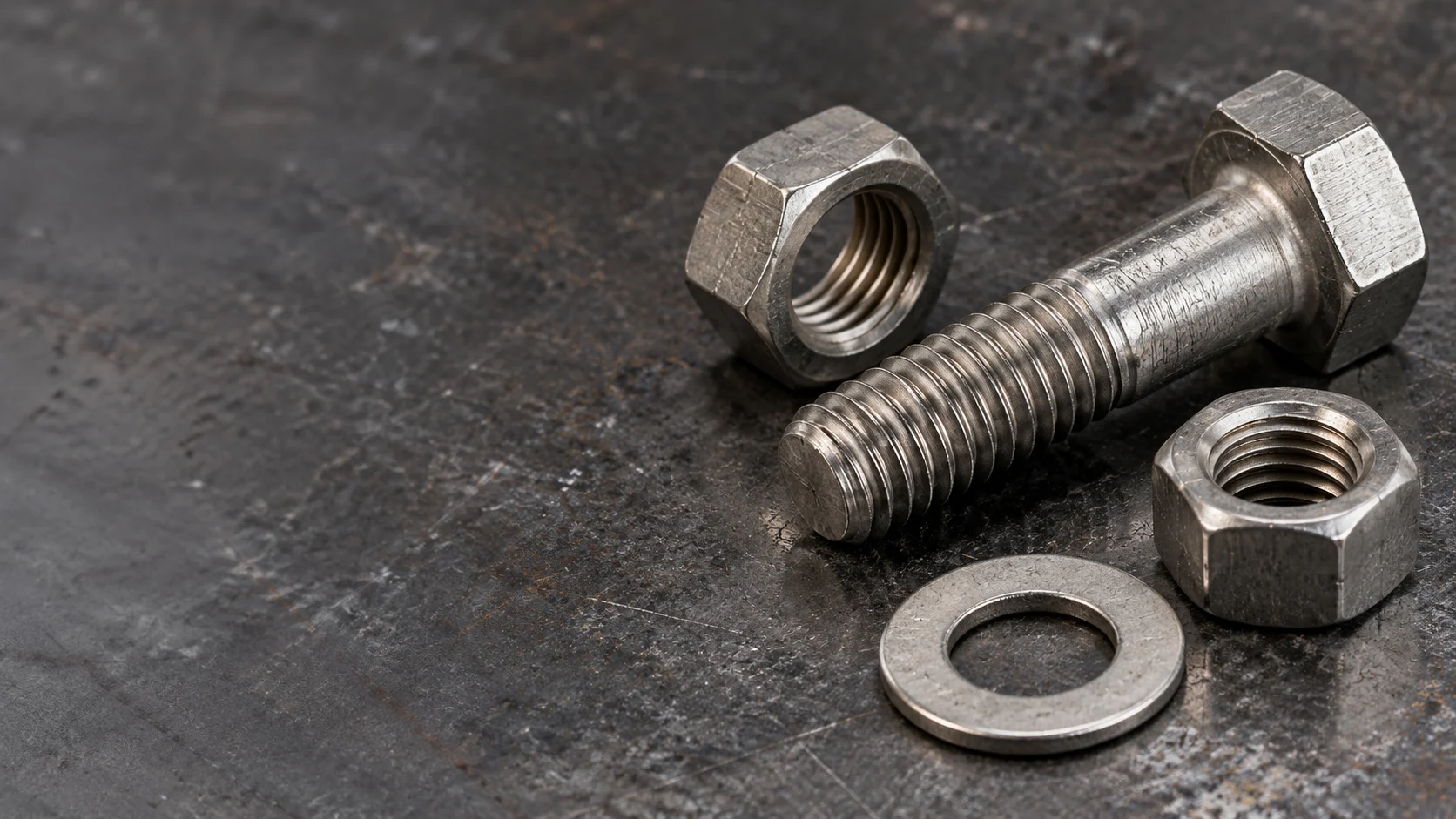
A stud-and-nut set is a useful enquiry format when both threaded members are being sourced. Include the bearing components through a stud, nut and washer set when they are part of the controlled assembly. A set description still needs quantities, component drawings and individual material requirements.
Find the guide for your next decision
The alloy is undecided. Start with what Inconel identifies or the wider stainless, duplex, A-286 and titanium comparison. Narrow an existing shortlist through Monel versus Inconel, Hastelloy versus Inconel or A-286 versus 718.
The service is the unresolved question. Use the focused seawater, sour-service / H₂S or hot-joint preload guide.
The alloy is selected, but assembly or acceptance is unclear. See galling diagnosis, stainless nuts on nickel-alloy bolts, fastener specification scopes or A-286 treatment and route changes. The 625/718 specification links above cover those grades.
Resolve differences before comparing prices
Ask each supplier to identify deviations from the drawing, proposed material condition, finished-part tests and documents included. Compare those responses before treating a lower price as an equivalent offer. If an original specification is missing, label the unresolved requirement and obtain design approval instead of letting a familiar alloy name stand in for it.
The Inconel 625 and Inconel 718 material pages provide grade references. For comparable quotations, send:
- The part: drawing revision, component quantities and requested delivery date.
- The approved material: grade, final condition, tests and documents; identify proposed deviations separately.
- The duty: medium, bolt metal temperature, dwell time and cycles, mating materials and approved loads. Where applicable, include minimum retained load and maximum permissible joint load.
- The unresolved issue: replacement symptoms or missing requirements for the design owner to resolve.
Submit these through the quotation form. A drawing can supply the dimensional details; there is no need to retype them.
For a headed-bolt enquiry with an approved alloy, use the Inconel 625 hex bolt or Inconel 718 hex bolt purchasing page. For a stud connection, use the set routes above so the mating components remain part of the enquiry.