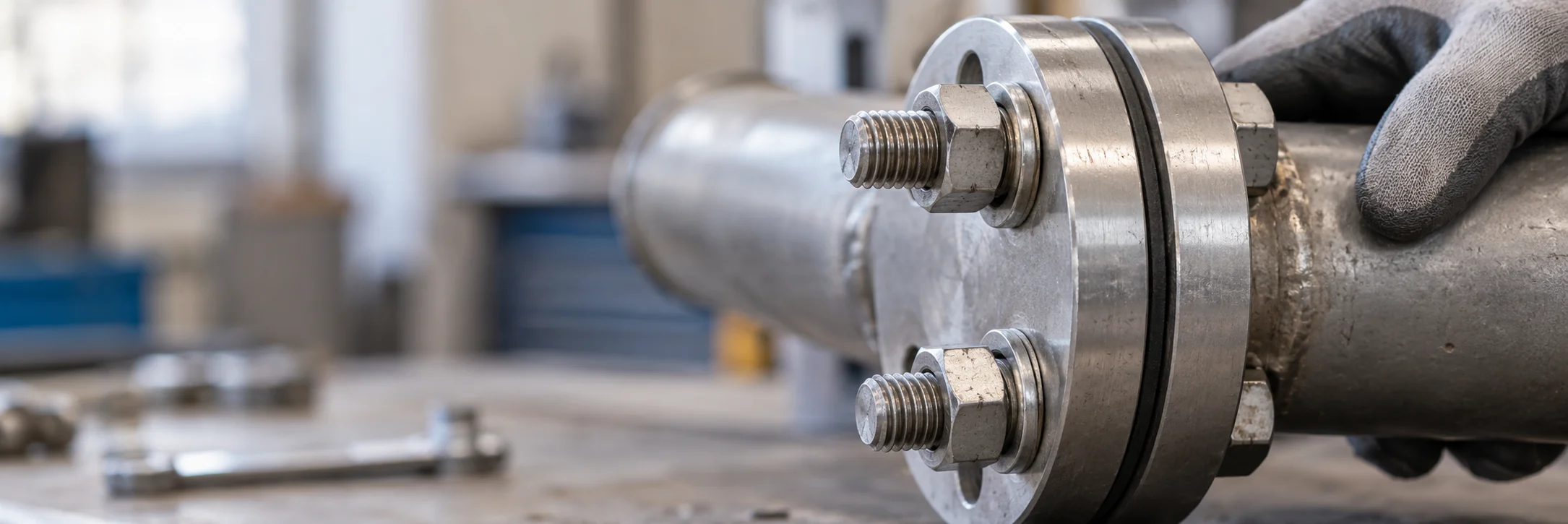
Incoloy 020 is a starting candidate for a defined sulfuric-acid duty. Hastelloy C-276 is worth investigating where mixed acids, chlorides or localized attack call for a different corrosion-resistant alloy. The choice turns on the liquid at the fastener, its concentration and temperature, and the damage mechanism—not on which alloy has the broader reputation. [1] [2]
This comparison uses Incoloy 020 / UNS N08020 and C-276 / UNS N10276. “Hastelloy” names a family, so establish the actual grade on an alternative offer. Then compare corrosion evidence for normal operation and cleaning, followed by the mechanical and purchase requirements of the finished fastener.
| Duty to assess | Starting candidate | What decides the choice? |
|---|---|---|
| A defined sulfuric-acid stream | Investigate Incoloy 020 using concentration- and temperature-specific producer data. | The fluid at the fastener, test basis and acceptable corrosion criterion. |
| Mixed acids, hydrochloric acid, chlorides or localized attack | Investigate C-276 using applicable acid, pitting and crevice-corrosion evidence. | The full mixture, contaminants, wetted location and relevant damage mechanism. |
| Cleaning differs from normal operation | Review either candidate against that separate exposure. | Cleaning chemistry, temperature, contact time, drainage and trapped liquid. |
Start with where the fastener gets wet
A bolt outside a sealed flange, a stud projecting into process fluid and a fastener under a leaking gasket do not have the same exposure. Locate the wetted thread, nut, washer and bearing surfaces on the assembly drawing. Establish whether the fastener normally sees the process stream, condensate, splash, washdown or only a credible leak.
For example, a process vessel may contain hot sulfuric acid while external bolts normally remain dry and cooler. That does not automatically make a corrosion-resistant upgrade unnecessary: a leak or cleaning operation may wet the connection. It means the material review should describe that exposure instead of assigning the vessel’s bulk-fluid conditions to every bolt without checking.
Map normal operation and intermittent exposure separately. Include deposits, gasket crevices, poor drainage and contact with other metals when relevant. Choosing a more resistant alloy does not correct an unidentified wet location or a joint detail that traps liquid.
Why the chemical duty changes the choice
Alloy 20 is an iron-balanced nickel-chromium alloy developed for aqueous chemical service, particularly sulfuric acid. C-276 has a nickel-rich matrix and much higher molybdenum content. Haynes attributes its performance across oxidizing and non-oxidizing acids to its chromium and molybdenum, and describes resistance to pitting and crevice attack in halide-containing solutions. This is a reason to investigate C-276 for mixed or chloride-bearing duties, rather than a rule that the more expensive alloy wins every acid comparison. [1] [2]
The scale of the chemistry difference is useful: the Alloy 020 producer bulletin specifies 2–3% molybdenum and 3–4% copper, whereas Haynes lists nominal 16% molybdenum and 4% tungsten for C-276. These are mass-percent composition figures with different reporting bases—specified ranges versus nominal composition—not corrosion-rate predictions. Concentration, temperature and oxidizing conditions still decide whether the expected benefit appears in the actual fluid. [1] [2]
Special Metals publishes sulfuric-acid data for strip in its alloy 020 bulletin. Haynes explains that its C-276 iso-corrosion information is based on laboratory tests in reagent-grade acids and encourages field testing before industrial use. These are valuable screening sources with defined test contexts. They are not interchangeable records of a threaded assembly in a contaminated plant stream. [1] [2]
When comparing rates, align the acid, concentration basis, temperature, material condition, test method and duration. Keep general-corrosion rates separate from pitting and crevice-corrosion test evidence: record the exposure and acceptance criterion for each. Evidence for one mechanism does not establish the others. A blank table cell is missing data, not zero corrosion. Keep the project’s acceptable corrosion criterion separate from the producer’s plotted reference line.
What process and cleaning data should you send?
Collect these inputs separately for process and cleaning exposure:
- Medium: Full chemical names and all known mixture components, including cleaning and rinse liquids.
- Concentration: Normal and expected ranges, with units and basis such as wt% or vol%.
- Impurities: Known contaminants, including chloride where relevant, with amounts and units. Include known aeration or oxidizing conditions; mark unmeasured values as unknown.
- Temperature and exposure: Normal, minimum and maximum temperature at the wetted fastener, short excursions and duration. Identify the wet location, contact time and drainage.
These are inputs for a material review, not alloy acceptance limits. Keep process, cleaning, condensate and credible leak conditions separate so that neither supplier has to silently assume the missing values.
Read a corrosion result before comparing alloys
Special Metals’ Table 5 gives strip-test results over 168 hours. For sulfuric acid labelled 70%, it reports 0.051 mm/year at 50°C and 0.178 mm/year at 85°C. The table does not identify the percentage basis or the strip’s heat-treatment condition. These are annualized corrosion rates from the stated test, not a one-year exposure or a fastener-life prediction. [1]
Example screening criterion: suppose a project initially screens for a reported general-corrosion rate below 0.1 mm/year. The 50°C Incoloy 020 result falls below that line; the 85°C result does not. Temperature has changed the screening outcome even though the acid name and labelled concentration stayed the same. The 0.1 limit is an assumed project criterion here, not a universal acceptance rule.
For the hotter point, the next step is to find a C-276 result on a compatible concentration basis, material condition and test method. Haynes provides laboratory maps and selected reagent-grade-acid results for that investigation. Its plotted 0.1 mm/year line is a laboratory reference boundary. The two Alloy 20 values do not supply a matched C-276 comparison or predict either fastener’s life. Resolve the missing test and service bases before using the screening result to select or reject a grade, and assess the actual thread crevice separately. [2]
Why a cleaning step can change the comparison
Hypothetical enquiry review, not a reported installation. A buyer describes a stable sulfuric-acid process and requests Incoloy 020 studs. A C-276 quotation is offered as an alternative. The buyer later adds that a chloride-bearing cleaning liquid may remain under the gasket before restart.
That extra fact creates another exposure to assess. It does not prove Incoloy 020 will fail or C-276 will pass. Record the cleaning chemistry and temperature, contact time, drainage and possible concentration in the crevice. Ask for evidence covering both the normal process and this separate wet period, rather than accepting a general “acid resistant” statement.
If evidence covers only the clean process acid, the comparison remains incomplete. The responsible material/design reviewer can request more representative corrosion evidence, revise the cleaning or drainage arrangement, or narrow the permissible duty. Do not fill the gap with a universal concentration threshold or an assumed service life.
A corrosion candidate must also meet the bolt requirements
Once corrosion evidence supports a candidate, check the final material condition, required mechanical properties, drawing, threads and mating parts. A corrosion table cannot supply a tightening torque, proof load or elevated-temperature strength. Conversely, a satisfactory tensile result does not establish resistance to the liquid trapped beneath a washer.
Specify the product form and acceptance basis explicitly. A bar certificate identifies evidence about the feedstock; the agreed finished-fastener requirements still need their own inspection and test coverage. For a stud-and-nut order, identify the material and condition of both components rather than assuming the nut follows the stud’s description.
The Incoloy 020 and C-276 material pages provide grade references. The broader Hastelloy versus Inconel guide addresses other grade families; it is not a substitute for this particular chemical-duty comparison.
Compare the accepted order scope
Ask both suppliers to price the same drawing revision, quantities, specified material condition and mechanical requirements, surface requirements and evidence package. Identify deviations separately. Comparing an Incoloy 020 finished-stud quotation with C-276 bar-only pricing tells you little about the cost of the accepted fastener order. Use current quotations, not a fixed alloy-price multiplier.
For an initial enquiry, send the part description or drawing, material options, size and quantity, plus the known process and cleaning conditions. Detailed uncertainties can be clarified during review. Review Hastelloy C-276 Bolts for hex-bolt order requirements, or the stud-bolt page for the corresponding form, then send the enquiry.
BYBOLT’s delivery baseline includes MTC/EN 10204 3.1, heat-number traceability and mechanical testing, with sampled GO/NO-GO checks on threaded products. The quotation and order identify what each report covers and any additional corrosion, finished-part or third-party evidence required.